If you could be someone else for a day, who would you be, and why?
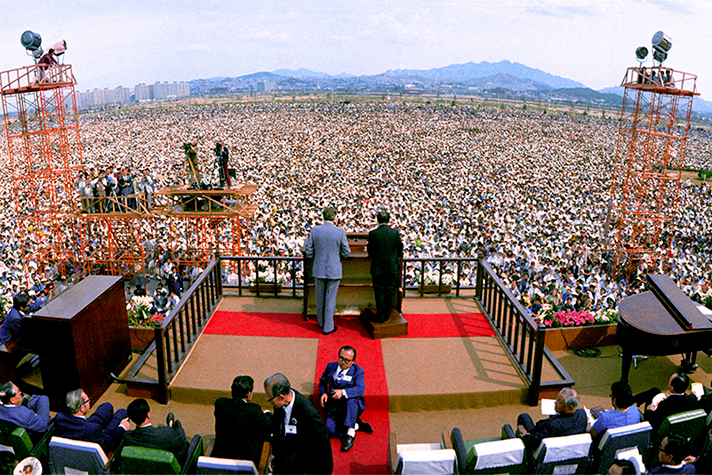
The person I would like to be for a day has passed away now, but if I could choose it would be Billy Graham at one of his crusades.
I would love to know what it felt like to look out over huge crowds and see people streaming to the front to receive Jesus as their Lord and Saviour.
In the image above from 1973, there was 1.1 million people present in Soul, South Korea. Imagine preaching to 1.1 million people and tens of thousands receiving Christ. It would be truly amazing.
Before I finish I want to end with one of his most famous quotes.
Someday you will read or hear that Billy Graham is dead. Don’t you believe a word of it. I shall be more alive than I am now. I will just have changed my address. I will have gone into the presence of God.
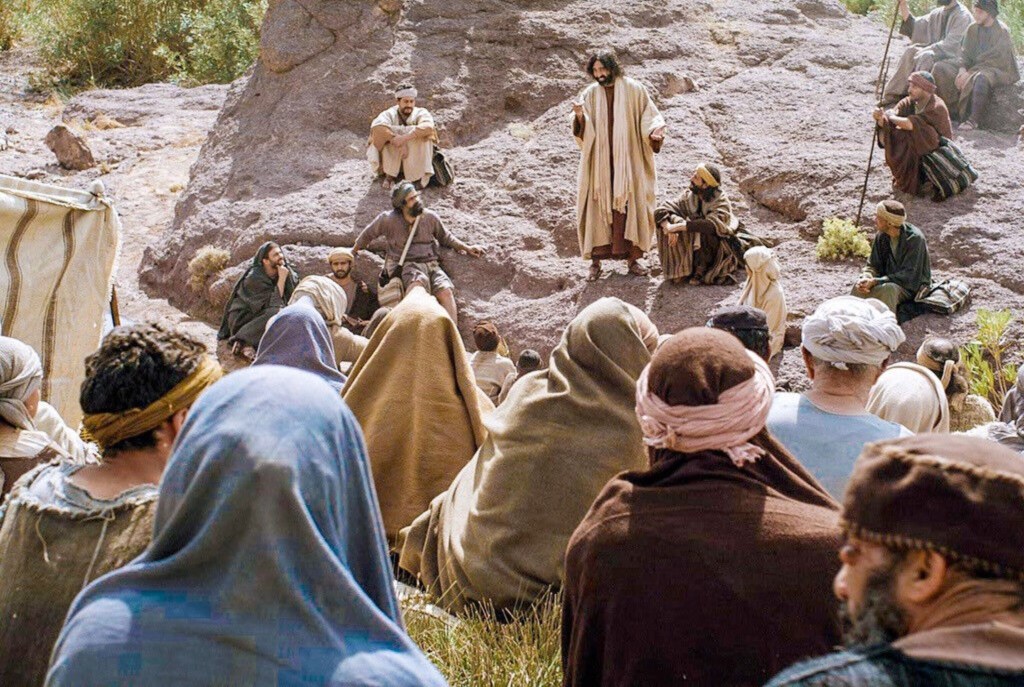
In Matthew 5:3-10 Jesus opens the Sermon on the Mount with The Beatitudes or the be-attitudes as I have heard them called. It says…
3 “God blesses those who are poor and realize their need for him, for the Kingdom of Heaven is theirs. 4 God blesses those who mourn, for they will be comforted. 5 God blesses those who are humble, for they will inherit the whole earth. 6 God blesses those who hunger and thirst for justice, for they will be satisfied. 7 God blesses those who are merciful, for they will be shown mercy. 8 God blesses those whose hearts are pure, for they will see God. 9 God blesses those who work for peace, for they will be called the children of God. 10 God blesses those who are persecuted for doing right, for the Kingdom of Heaven is theirs.
It is interesting to note that the Greek work used for “blesses” is Makareeos (Mak-ar-ee-os). This word can be translated as supremely blessed, fortunate, well off, or happy. This helps us to further understand what this passage means.
When I first read this passage years ago I thought it was talking about different groups of people. However, over time I have come to see that these are the attitudes we should all display as Christians.
In much the same way we should display the Fruits of the Spirit that Galatians 5:22-23 talks about, as Christians we should display these qualities that Jesus opened His most famous sermon with.
God wants us to realise our need for Him, He wants us to want to see justice done, He wants us to be merciful, He wants us to be pure of heart. He also promises to comfort us when we mourn and when we are persecuted for our faith.
Let’s all purpose today to really live with pure hearts, to be humble, to work for peace, to show justice and realise our complete and total dependence on God.
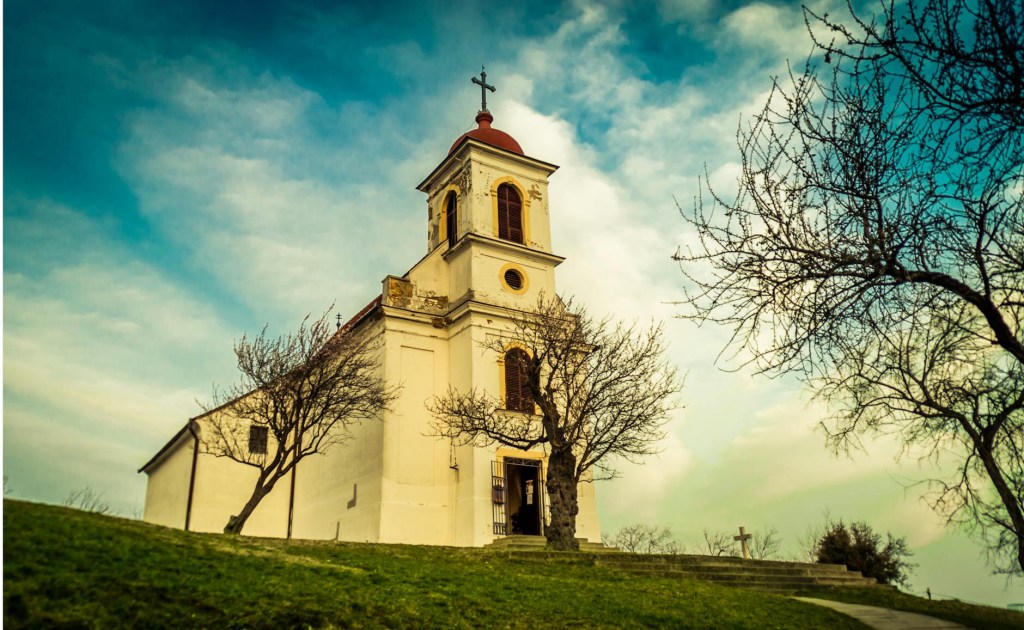
Saying you do not go to church because people there are sinners and hypocrites, is like saying, I do not go to the gym as there are people that are out of shape.
The reality is there are sinners and hypocrites at church. It is the best place for us to be, myself included!
We should be in a place where we can pray, hear the Bible read, listen to homilies, receive forgiveness and partake in the sacraments. These are what sinners need to be made holy.
The reality is that like people who are out of shape at the gym trying to improve, there are also many people who are in shape to inspire us. The same goes for church.
When we go to church there are people there who are further along the journey, who are more holy, more learned in the Bible, who pray with a closeness to God that we can aim for.
When I go to church I focus less on people’s sin and more on the areas where they shine. I try to come alongside them and learn from them. That keeps me growing.
Remember there is no perfect church full of perfect people, just sinners and hypocrites who need the love and grace of God to keep growing closer to Christ.
I just watched a really good overview of the church councils over the past 2000 years. These councils were called to make decisions on doctrine, heresy, church life and leadership and responding to an ever changing world. The 15 minute video below gives a really good explanation of them all and why they were called.
When I first became a Christian the Refiner’s Fire song was just released. It quickly became a favourite and a prayer of my heart.
I have not heard it for years, but I started singing it during my devotions this morning. Many years later it still speaks to my heart. It is still a prayer for me.
Looking back I can see how it shaped my life. In church I could hardly get through it without crying. Even now it is hard to fully sing it through.
If you are interested you can find it here on YouTube.


 PASSIONAustralia.blog