Bible for new Christians

I was asked recently, “What is the best Bible for a new Christian”. This is a really good question as it is important to start off right.

I believe the best Bible for new Christians is the Life Application Study Bible (LASB). The reason I believe this is because it has a book introduction for each book, maps of key locations, profiles of the authors and most importantly a commentary in the margins.

The commentary in the margins is a great feature. Some Bible verses do not make sense at first reading. They might have a cultural or historical meaning that we find hard to understand in today’s world. Having these notes can help us understand how it applies to us today.

As far as a Bible translation goes I think it is important to find one that you find easy to read and understand. With the LASB it has a number of English translations that range from a simple plain English versions, right through to the older King James style of writing.

For my personal Bible reading and preaching I mostly use the New Living Translation. I find this simple to read as it paraphrases the original text (Hebrew or Greek) in a way I find easy to read and understand. I have a large print paper version and I also have copies on my iPad and iPhone…so it goes with me everywhere!

If you are interested you can find more information on the LASB website here.

Weekly worship of first Christians

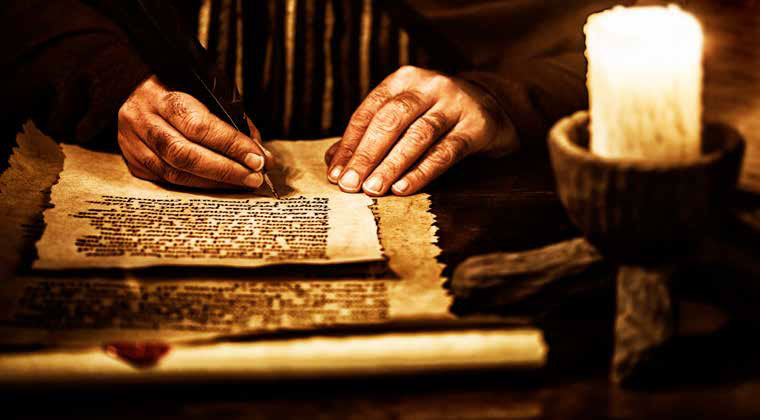
I am currently reading through the practices of the early church. In my reading I came across a letter by Justin Martyr in 150AD. The section below is taken from his First Apology Chapter 67.

He was writing to explain what Christians did when they met together. In his letter to Roman Emperor Titus Aelius Hadrianus Antoninus Pius, he explains some of the weekly things Christians did.

It is interesting that they did many of the things we still do today. Things like meeting on Sunday, bless the Maker, prayer, reading the writings of the Apostles and Prophets, a teaching exhortation, celebrated Communion, and a collection and distribution to the widows and orphans.

Weekly Worship of the Christians.

And we afterwards continually remind each other of these things. And the wealthy among us help the needy; and we always keep together; and for all things wherewith we are supplied, we bless the Maker of all through His Son Jesus Christ, and through the Holy Ghost. And on the day called Sunday,76 all who live in cities or in the country gather together to one place, and the memoirs of the apostles or the writings of the prophets are read, as long as time permits; then, when the reader has ceased, the president verbally instructs, and exhorts to the imitation of these good things. Then we all rise together and pray, and, as we before said, when our prayer is ended, bread and wine and water are brought, and the president in like manner offers prayers and thanksgivings, according to his ability,77 and the people assent, saying Amen; and there is a distribution to each, and a participation of that over which thanks have been given,78 and to those who are absent a portion is sent by the deacons. And they who are well to do, and willing, give what each thinks fit; and what is collected is deposited with the president, who succours the orphans and widows and those who, through sickness or any other cause, are in want, and those who are in bonds and the strangers sojourning among us, and in a word takes care of all who are in need. But Sunday is the day on which we all hold our common assembly, because it is the first day on which God, having wrought a change in the darkness and matter, made the world; and Jesus Christ our Saviour on the same day rose from the dead. For He was crucified on the day before that of Saturn (Saturday); and on the day after that of Saturn, which is the day of the Sun, having appeared to His apostles and disciples, He taught them these things, which we have submitted to you also for your consideration.

The need for workers

In Matthew 9:32-37 we see Jesus has been preaching, teaching about the Kingdom and healing the sick. In verse 36 He looks upon the crowd of people and it says compassion welled up within Him. He said the people looked like lost sheep without a shepherd.

Then Jesus makes an interesting request. He said to his disciples, “The harvest is great, but the workers are few. So pray to the Lord who is in charge of the harvest; ask him to send more workers into his fields” (v37-38).

Up until this point Jesus has done all the ministry work. He had been preaching, teaching, healing, driving out demons, raising the dead and calming storms. The disciples were following along and just watching and taking it all in.

Now the disciples were getting asked to be involved in His work. How? By praying. Jesus asked them to pray for workers to go out in to the harvest. As I reflected on this request a couple of things came to mind.

1. Prayer should always precede ministry outreach.

2. When I pray God often softens my heart and calls me to be involved.

In the start of the next chapter we see Jesus sends out the 12 disciples. We do not know how long after it was when He asked them to pray, but I suspect it was fairly soon.

Matthew 10:5-8 NLT says, “Jesus sent out the twelve apostles with these instructions: “Don’t go to the Gentiles or the Samaritans, [6] but only to the people of Israel-God’s lost sheep. [7] Go and announce to them that the Kingdom of Heaven is near. [8] Heal the sick, raise the dead, cure those with leprosy, and cast out demons. Give as freely as you have received!”

In this sending out we see Jesus gave them strict instructions. Go to these people, preach the Kingdom, heal the sick and caste out demons. It was a set of clear instructions with defined boundaries.

As I dwell on these passages from Matthew 9&10. I am reminded on our early days at PASSION Australia. Our board would have a meal together and then spend an hour or two in prayer asking God what He wanted us to do.

We would simply pray, “Lord You said the harvest field is ripe, but the workers were few. Please send us out. Let us know where to go and what to do. Lead us to the people whose hearts you have been preparing, we want to lead them to You. Amen”. Then we would wait on the Lord.

Often over the next few days God would speak to us separately and when we came together again, we would share what God had been saying to us. Most times it was exactly the same and it confirmed what we needed to do.

At first we were surprised, like the disciples when they came back from their first mission. But in time we realised that if we pray first, then God would lead us to the people who needed Him and were ready to receive.

We learned a simple lesson in the early days of PASSION. The Great Commission of Matthew 28:18-20 is given to us, but ultimately it is God’s mission. He wants to whole world to come to know Jesus and He uses us. But it always works best when we seek Him and pray, “What do You want us to do and where do You want us to go?”

A prayer for sleep

Blessed are You, Lord our God, King of the universe, who brings sleep to my eyes, slumber to my eyelids. Let my sleep be undisturbed by troubling thoughts, bad dreams, and wicked schemes. May I have a night of tranquil slumber and wake feeling truly refreshed. I ask in Jesus name, by the power of the Holy Spirit, Amen.

Apostle Paul’s suffering and commitment

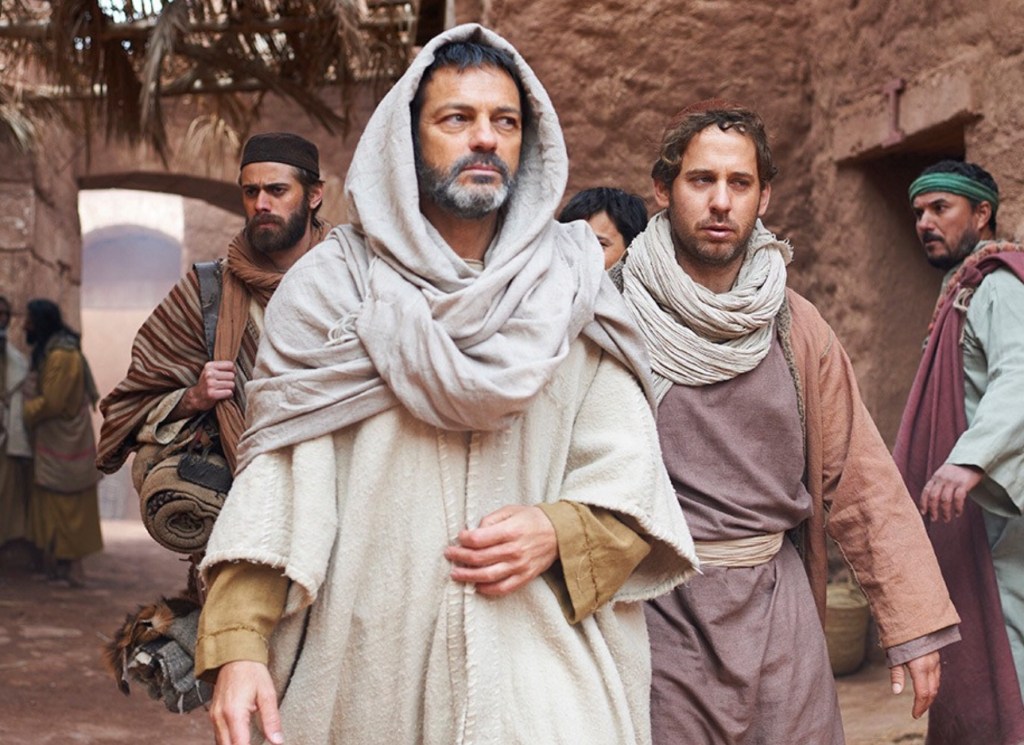
I was looking at the suffering of the Apostle Paul recently. I was amazed how much he went through in his years of ministry. I was also amazed by his commitment to preach the Gospel in the midst of his suffering.

In 2 Corinthians 6:3-10 we see some of Paul’s hardships. On a number of occasions he was beaten by mobs, put in jail, worked to exhaustion, endured sleepless nights and gone without food.

Also in 2 Corinthians 11:23-28 we read he was also whipped nearly 200 times, beaten with rods, faced death again and again, was shipwrecked three times, was stoned, faced danger from fake Christians and nearly drowned from swollen rivers.

This does not even mentioned the “thorn in Paul’s flesh from Satan” mentioned in 2 Corinthians 12:7-10. A thorn that he was able to bear by God’s grace.

Bible scholars tell us that Paul was converted about 36 AD and he died in Rome in 68 AD. So this means he was in Christian ministry for about 32 years. As 2 Corinthians was written about 57 AD these listed sufferings only record about two thirds of his ministry time!

So how was Paul able to stand firm and keep going in his ministry mission in light of all this suffering? Here are some of the reasons I think.

  1. His amazing conversion on the road to Damascus where he spoke with Jesus (Acts 9:3-19)
  2. He knew he was called by God to reach the Gentiles for Christ (Galatians 1:15-16Acts 13:2-3)
  3. He knew he could do all things through Christ who was his strength (Philippians 4:13)
  4. Paul saw his mission as a race he needed to run with endurance (1 Corinthians 9:24-27Hebrews 12:1)
  5. He knew he had to keep his eyes fixed on Jesus (Hebrews 12:2)
  6. Paul saw that he was no longer living, but Christ living in and through him (Galatians 2:20)
  7. Paul knew he would receive a crown of righteousness from the Lord (2 Timothy 4:8)
  8. Paul saw his life as a drink offering being poured out to the Lord (2 Timothy 4:6)

I am really inspired by the life of Paul. I have been through a lot of suffering and it has made me stronger, but it is nothing compared to what Paul suffered for the Gospel.

If you are suffering for the Gospel today I hope you can draw strength from God and the example of the Apostle Paul.