Crucify Him, crucify Him
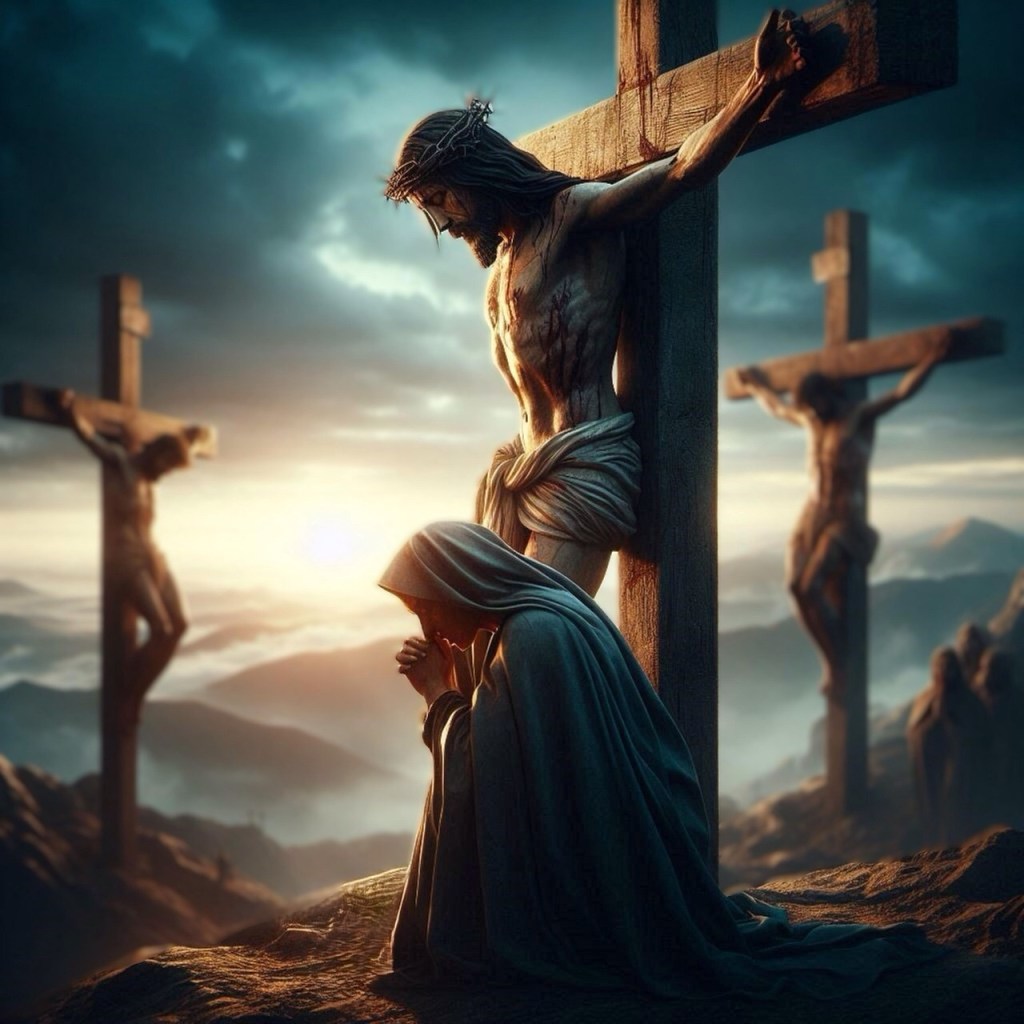
Many years ago at Bible college one of my lecturers asked us to read through a play in our class.

The class was New Testament introduction and we had to read about the trial of Jesus. We were split up in to groups and we have five minutes to read our assigned sections. We had no choice who we were.

I was put in to a group of people who wanted to see Jesus crucified. As the trial was taking place we had to yell at Pilate to crucify Jesus. We had to be loud, angry and convincing as we did it.

I cannot tell you how hard it was to get the words “Crucify Him, crucify Him” to come out of my mouth. It was just a simple script, but the emotions that ran around my body and mind were very strong.

As I spoke those words I longed to be one of His followers who begged for Him to be released. Even though I was nearly 2000 years after the event and I knew about the resurrection I was torn inside.

After we read through the script, we had a class discussion. The lecturer asked each group how we felt and what we thought. It was not surprising the emotions it brought up in all of us.

We all wanted to see Jesus released and we all felt powerless. Even the person reading Pilate’s words did not want to see Jesus crucified!

This was over 30 years ago, but the memories are still with me. To yell “Crucify Him, crucify Him” over and over was very difficult for me. But it gave me a real glimpse in to the trial and death sentence of Jesus.

Somehow I suspect this was our lecturers plan. That we would see the trial and sentence of Jesus in a new and deeper way. I can certainly say that it worked for me!
Reading outside your tradition

One of the things Bible college did was teach me to read outside my church tradition. By this I mean do not just read things that are written by people in your denomination.

The Bible college I attended had lecturers from across the Christian traditions. We had people from evangelical, pentecostal, orthodox and even catholic churches as lecturers. Most were open to tell us which tradition they came from, some would not tell us. They wanted us to try and guess during the semester.

I found this really helpful in understanding what people and various churches taught. I think it made me more open to learn and to help me solidify some of my own beliefs. It also showed me that we have way more in common than differences.

For one of my theology units we used the textbook “The Mosaic of Christian Belief” by Roger E. Olsen. It took a topic and broke it down as follows for example on creation…

  1. Issues and polarities of christian beliefs about creation.
  2. The consensus christian beliefs about creation.
  3. Alternates to the christian consensus about creation.
  4. Diverse christian beliefs about creation.
  5. A unitive christian view on creation.

Looking at topics from this perspective gave us a broad overview of what christians believe today about an issue and positions held down through the ages.

Since finishing Bible college I have continued this habit. Last year I read a number of books from the Catholic tradition, this year I am reading more Anglican books and catechisms.

Some might think of this as not helpful or even a little bit “dangerous”, but I do it through the lens of Bible college and being well formed in my beliefs. I can eat the meat and spit out the bones as they say.

Being open to other traditions has helped me to read the early church fathers, read the catholic and anglican catechisms, read about the lives of the Saints, and about praying with the catholic rosary and anglican prayer beads.

Reading from other traditions has helped me grow in my faith. Not only do I understand different positions a little bit more, but I have learned and incorporated new things in to my personal faith.

Groups in the time of Jesus

When I was at Bible College one of the assignments I had to do was about the four main groups of people that were around when Jesus walked the earth. This was to give us an idea of what life was like at that time and to give us a context for Jesus’ words.

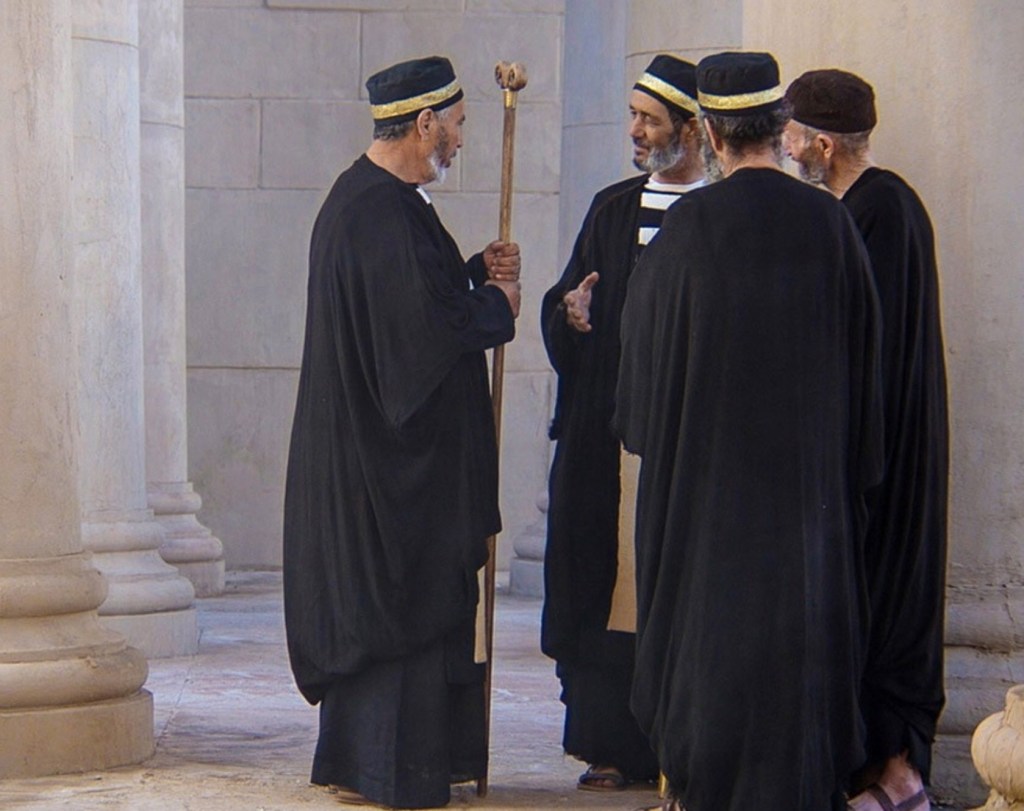
The four main groups we have to look at were the Pharisees, Saducees, Essenes and Zealots. Here’s a very brief rundown of each group…

Pharisees – very strict sect who followed the law of Moses and had over 600 laws to guide their daily lives. They spent a lot of time interpreting the laws and trying to apply them to their everyday lives. They believed Israel was a Kingdom of Priests and a Holy Nation and thought that if all of Israel could keep the law for one day, then the Messiah would come. Jesus spoke out against them because they were more interested in keeping the law than showing compassion to those around them and looking good on the outside.

Sadducees – they also followed the law of Moses but rejected many of the oral traditional laws that the Pharisees held. Their main focus was the Temple and Temple activities. They did not believe in an afterlife or future judgement. They believed that God did not intervene in the affairs of men and their motto was if it is to be, it is up to me. Because of this they survived by cooperating with the Roman authorities which gave them much power in the Jewish religion. To be a Saducee you must be of priestly heritage. The Saducees were the main teachers in the Temple.

Essenes – this group of people saw themselves as the only people who worshipped the true faith and that they were the true remnant of Israel. They believe all others had left the true teachings behind and the Temple had been corrupted. Because of this they separated themselves in their own communities and lived a very strict monastic lifestyle. They believed that God would come and judge the rest of the Jews and the world and vindicate their beliefs about God and true religion. They avoided all unnecessary contact with non-Essenes.

Zealots – they were part of the Jewish patriotic party and opposed the Roman occupation of the region at all costs. Their motto was we will have no king, but God. Their goal was a land truly free from Gentile defilement, just as God had originally intended according to them. They sometimes used violence to bring their cause to pass. Some of the community of Jews saw them as bandits, but they saw themselves freedom fighters.

The interesting thing about this assignment and it really helped me to understand life in New Testament times a little bit better. It gave me a window in to religious life at the time that Jesus walked the earth.

It also helped me to understand people (and myself) today too. Many people of faith still live out their faith in a way similar to these groups. Some focus on the Bible like the Pharisees. For some it is all about church like the Sadducees. Some separate themselves like the Essenes. While others are like the Zealots and have no king but God.

Hard personal goal I set

What was the hardest personal goal you’ve set for yourself?

Bible college for me was a hard goal I set. I had wanted to go from right when I was a new Christian. When I went the first time I do not think I was ready. Years later I did it and found it a lot better, but still very hard.

Why was it so hard? Some people are natural students. They love to read and learn and they seem to ace all the assignments and quizzes. As someone who is not a big reader, I found Bible college really hard for that reason.

The other thing that made it hard was the spiritual change and growth you have. So many times you are challenged by what the Bible says and where you are at. You see that you fall short and you realise that you need to change. That can be hard, really hard.

I am not saying that I did not enjoy Bible college. It was very hard, but I did enjoy it overall. Especially once it was done. I set a goal and I achieved it. Plus I would not have been able to work as a Pastor and a Chaplain if I did not do it.

So what was a hard personal goal I have set? Bible college is one for me.

Weekly worship of first Christians

I am currently reading through the practices of the early church. In my reading I came across a letter by Justin Martyr in 150AD. The section below is taken from his First Apology Chapter 67.

He was writing to explain what Christians did when they met together. In his letter to Roman Emperor Titus Aelius Hadrianus Antoninus Pius, he explains some of the weekly things Christians did.

It is interesting that they did many of the things we still do today. Things like meeting on Sunday, bless the Maker, prayer, reading the writings of the Apostles and Prophets, a teaching exhortation, celebrated Communion, and a collection and distribution to the widows and orphans.

Weekly Worship of the Christians.

And we afterwards continually remind each other of these things. And the wealthy among us help the needy; and we always keep together; and for all things wherewith we are supplied, we bless the Maker of all through His Son Jesus Christ, and through the Holy Ghost. And on the day called Sunday,76 all who live in cities or in the country gather together to one place, and the memoirs of the apostles or the writings of the prophets are read, as long as time permits; then, when the reader has ceased, the president verbally instructs, and exhorts to the imitation of these good things. Then we all rise together and pray, and, as we before said, when our prayer is ended, bread and wine and water are brought, and the president in like manner offers prayers and thanksgivings, according to his ability,77 and the people assent, saying Amen; and there is a distribution to each, and a participation of that over which thanks have been given,78 and to those who are absent a portion is sent by the deacons. And they who are well to do, and willing, give what each thinks fit; and what is collected is deposited with the president, who succours the orphans and widows and those who, through sickness or any other cause, are in want, and those who are in bonds and the strangers sojourning among us, and in a word takes care of all who are in need. But Sunday is the day on which we all hold our common assembly, because it is the first day on which God, having wrought a change in the darkness and matter, made the world; and Jesus Christ our Saviour on the same day rose from the dead. For He was crucified on the day before that of Saturn (Saturday); and on the day after that of Saturn, which is the day of the Sun, having appeared to His apostles and disciples, He taught them these things, which we have submitted to you also for your consideration.