Deep waters

Today’s Our Daily Bread was really good. Please enjoy…

Bible reading

Proverbs 20:4-5, 24-25

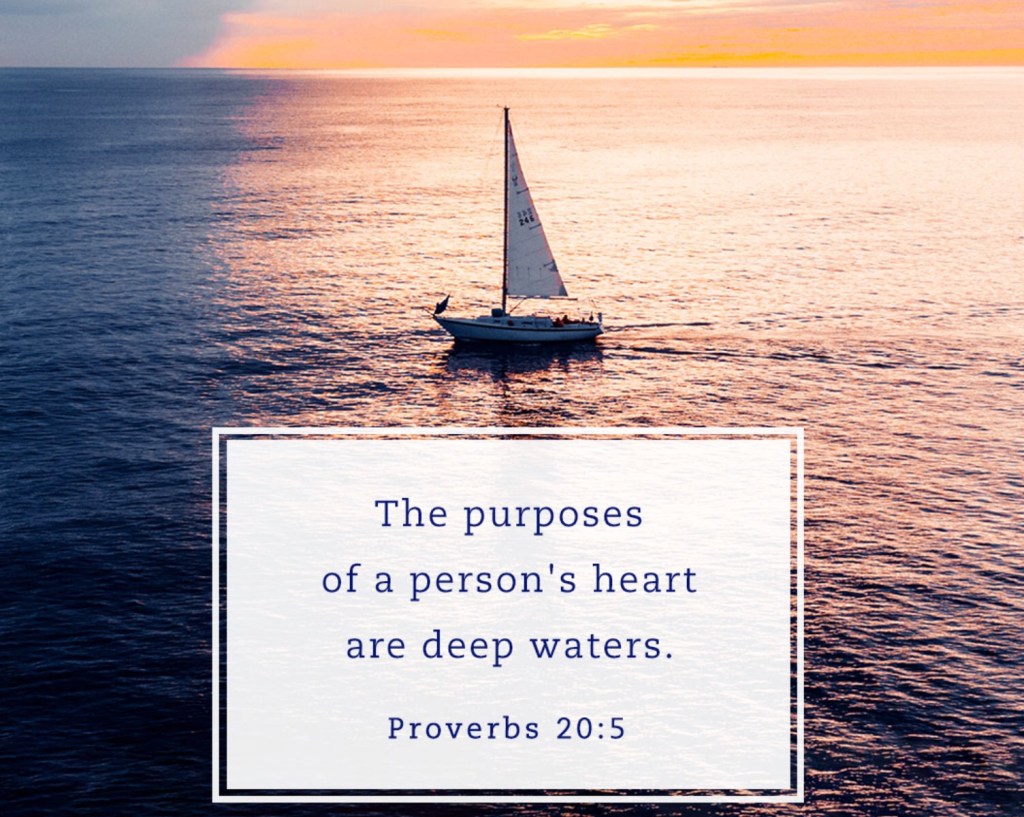
When Bill Pinkney sailed solo around the world in 1992—taking the hard route around the perilous Great Southern Capes—he did it for a higher purpose. His voyage was to inspire and educate children. That included students at his former inner-city Chicago elementary school. His goal? To show how far they could go by studying hard and making a commitment—the word he chose in naming his boat. When Bill takes schoolkids on the water in Commitment, he says, “They’ve got that tiller in their hand and they learn about control, self-control, they learn about teamwork . . . all the basics that one needs in life to be successful.”

Pinkney’s words paint a portrait of Solomon’s wisdom. “The purposes of a person’s heart are deep waters, but one who has insight draws them out” (Proverbs 20:5). He invited others to examine their life goals. Otherwise, “it is a trap,” said Solomon, “to dedicate something rashly and only later to consider one’s vows” (v. 25).

In contrast, William Pinkney had a clear purpose that eventually inspired thirty thousand students across the United States to learn from his journey. He became the first African American inducted into the National Sailing Hall of Fame. “Kids were watching,” he said. With similar purpose, let’s set our course by the deep counsel of God’s instructions to us.

Reflect

In your life, what is the why for your work or ministry? What legacy do you hope to leave by what you accomplish?

Prayer

Inspire me, faithful God, to commit to working with a purpose that glorifies You. Amen.
Befriend your enemies

I really like today’s Our Daily Bread…

Dan endured daily beatings from the same prison guard. He felt compelled by Jesus to love this man, so one morning, before the beating was about to begin, Dan said, “Sir, if I’m going to see you every day for the rest of my life, let’s become friends.” The guard said, “No sir. We can never be friends.” Dan insisted and reached out his hand.

The guard froze. He began to shake, then grabbed Dan’s hand and wouldn’t let go. Tears streamed down his face. He said, “Dan, my name is Rosoc. I would love to be your friend.” The guard didn’t beat Dan that day, or ever again.

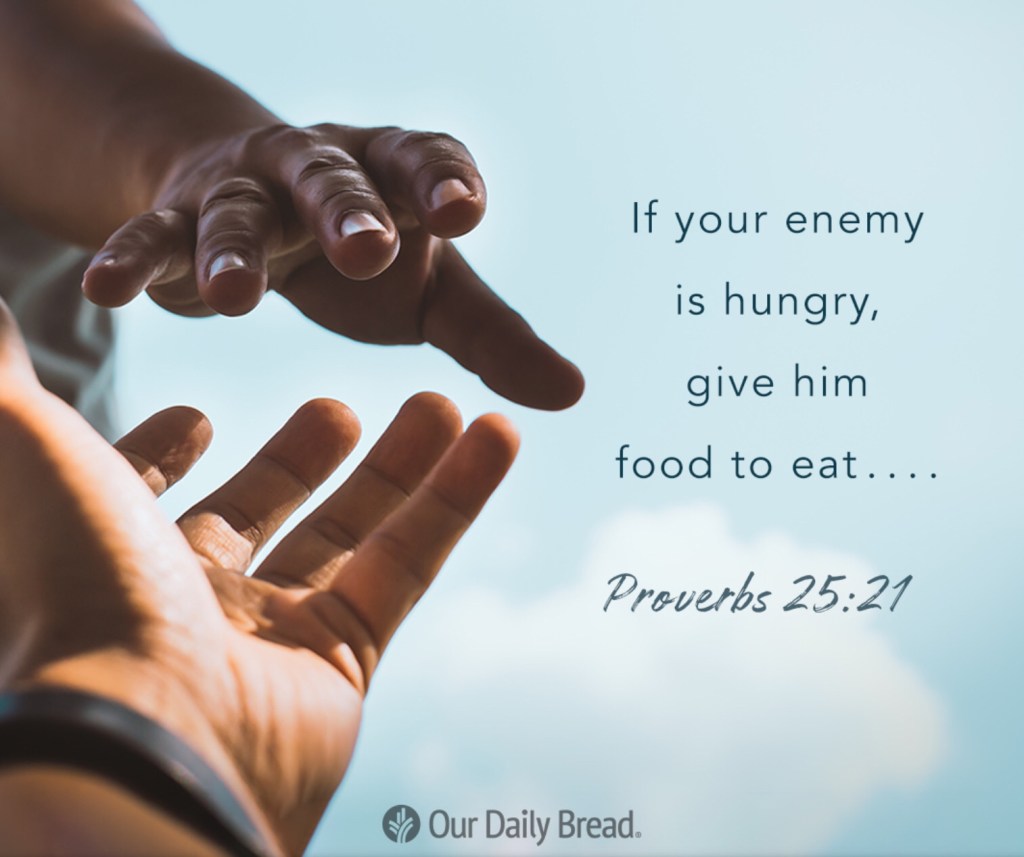
Scripture tells us, “If your enemy is hungry, give him food to eat; if he is thirsty, give him water to drink. In doing this, you will heap burning coals on his head, and the Lord will reward you” (Proverbs 25:21–22). The “coals” imagery may reflect an Egyptian ritual in which a guilty person showed his repentance by carrying a bowl of hot coals on his head. Similarly, our kindness may cause our enemies to become red in the face from embarrassment, which may lead them to repentance.

Who is your enemy? Whom do you dislike? Dan discovered that the kindness of Christ was strong enough to change any heart—his enemy’s and his own. We can too.

Dear Jesus, I praise You that Your kindness leads me to repentance and inspires me to be kind to my enemies. Amen.

Books that impacted me part 2

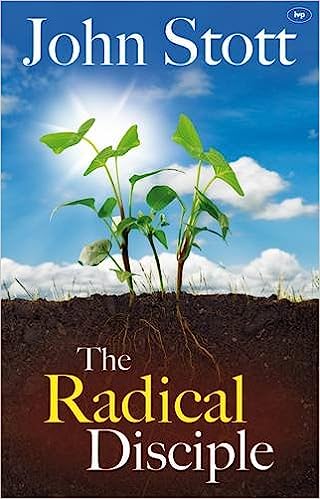
The second book that had a real impact on me was John Stott’s “The Radical Disciple”. I read this about 10 years ago.

Rev Dr. John Stott is known worldwide as a Bible teacher, writer, pastor and mission-leader. He was awarded the CBE in the Queens 2006 New Year Honours. Stott was honored by Time magazine in 2005 as one of the “100 Most Influential People in the World.”

I read the book at the recommendation of my wife who read it and really loved it. Often she would read a paragraph at a time and pause to reflect on the depth of his teaching. This got me really interested!

In his book Rev Stott touches on a number of areas including Non-conformity, Christlikeness, Maturity, Creation-care, Simplicity, Balance, Dependence and finally Death. Each chapter has powerful lessons.

Here is the blurb from the publisher…

“What is a life of radical discipleship? At root, it means we let Jesus set the agenda of our lives. We aren’t selective. We don’t pick and choose what is cosy and stay away from what is costly. He is Lord of all of life. In the last book by a Christian leader who was himself a radical disciple, John Stott opens up what it means at root to be a follower of Jesus. He explores eight aspects of Christian discipleship that we need to pay much closer attention to. The message is simple, classic and personal: Jesus is Lord. He calls. We follow.”

Books that impacted me part 1

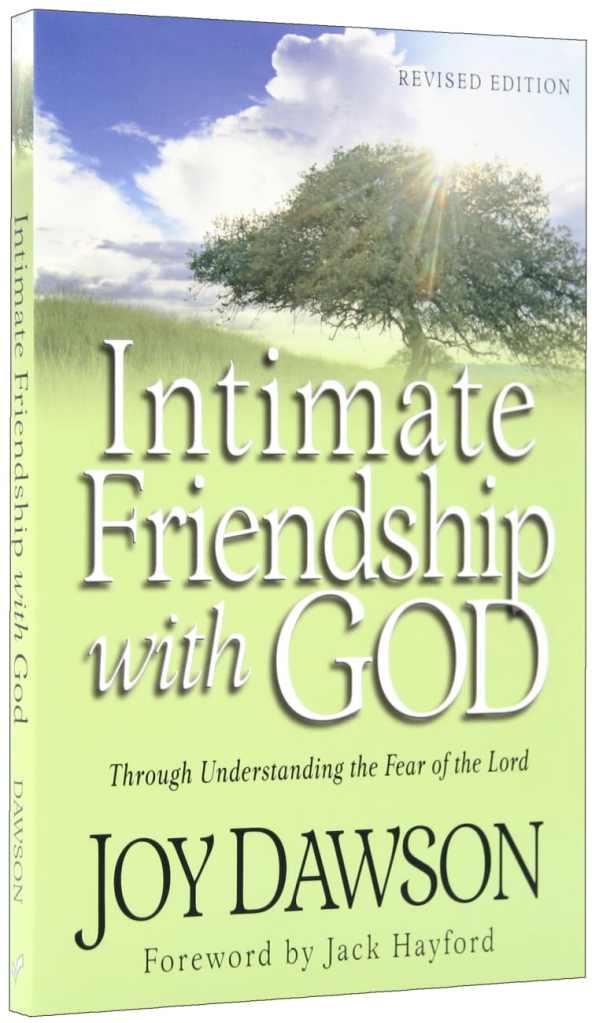
The first book that really impacted me I read back in the 1990s (it was revised in 2008). It was titled “Intimate friendship with God” and was by Joy Dawson.

This book spoke to my heart and helped shape my faith and relationship with God. It brought me to a point of revival and closeness with God like I had never experienced before.

For me it was the right book at the right time. I have often gone back to it hoping to rekindle that same fire and passion for God it gave me. It has to some degree, but nothing like that first time. First time around the impact for me was powerful.

Here is the blurb from the publisher…

It can sound like a contradiction: fear God, but consider him a close friend. How does a Christian find the balance between reverence and communion? For decades Joy Dawson has been helping readers reconcile diverse approaches to the throne of God. She shows them how to have God’s attitude toward sin, overcome the fear of what people think, attain godly wisdom, and fulfill their destinies. With personal examples and biblical truths, Dawson invites readers on a fascinating adventure into a place of intimate friendship with almighty God. This 20th anniversary edition includes fresh illustrations and a new foreword from Jack Hayford.

Wait on the Spirit

Today’s Our Daily Bread talks about waiting on the Spirit and not relying on our own efforts…

During the discussion of a book on the Holy Spirit written by a ninety-four-year-old German theologian named Jürgen Moltmann, an interviewer asked him: “How do you activate the Holy Spirit? Can you take a pill? Do the pharmaceutical companies [deliver the Spirit]?” Moltmann’s bushy eyebrows shot up. Shaking his head, he grinned, answering in accented English. “What can I do? Don’t do anything. Wait on the Spirit, and the Spirit will come.”

Moltmann highlighted our mistaken belief that our energy and expertise make things happen. Acts reveals that God makes things happen. At the start of the church, it had nothing to do with human strategy or impressive leadership. Rather, the Spirit arrived “like the blowing of a violent wind” into a room of frightened, helpless, and bewildered disciples (2:2). Next, the Spirit shattered all ethnic superiorities by gathering people who were at odds into one new community. The disciples were as shocked as anyone to see what God was doing within them. They didn’t make anything happen; “the Spirit enabled them” (v. 4).

The church—and our shared work in the world—isn’t defined by what we can do. We’re entirely dependent on what only the Spirit can do. This allows us to be both bold and restful. On this day—the day we celebrate Pentecost—may we wait for the Spirit and respond.

Prayer

God, I’ve exhausted myself by believing that I must make things happen. Holy Spirit, come and help me. In Jesus name, Amen