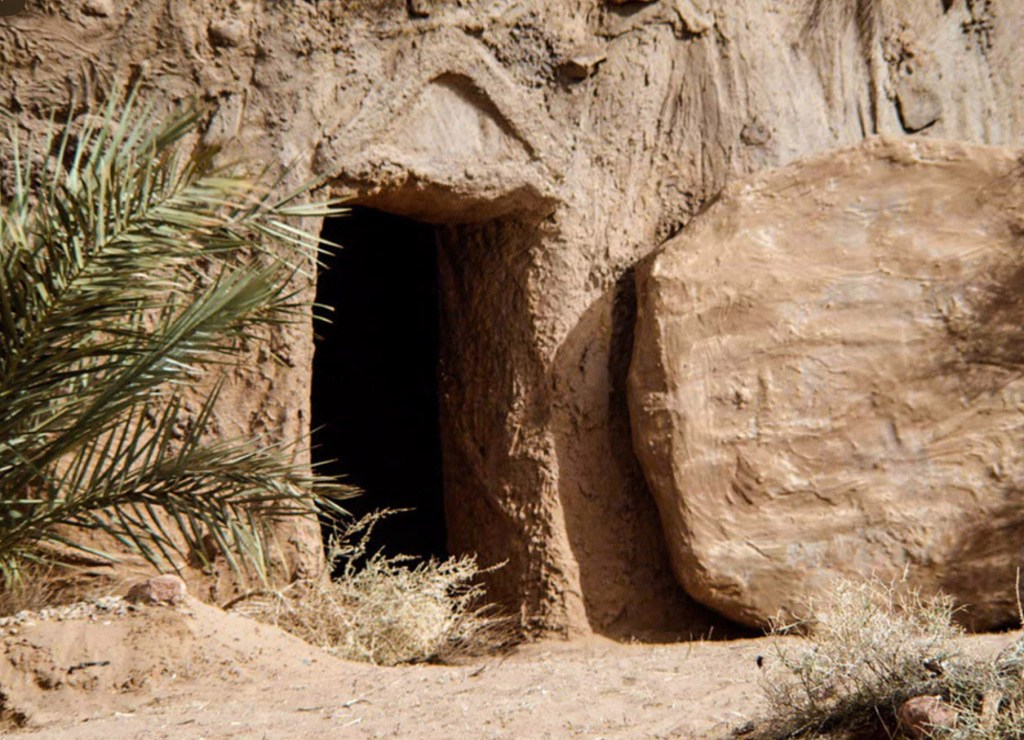
1 Corinthians 15:3-4,6-7 – I passed on to you what was most important and what had also been passed on to me. Christ died for our sins, just as the Scriptures said. [4] He was buried, and he was raised from the dead on the third day, just as the Scriptures said. [6] After that, he was seen by more than 500 of his followers at one time, most of whom are still alive, though some have died. [7] Then he was seen by James and later by all the apostles.
The resurrection of Jesus is one of the pillars of our faith as Christians. We believe He died for our sins and on the third day He rose to life.
The above passage tells us that Jesus that Jesus was seen by over 500 of His followers after His resurrection. This includes His 12 disciples.
The Bible and other historical writings tell us that most of the 12 disciples, later called Apostles, died at the hands of others because of their faith in Christ.
They were so convinced that Christ died and was raised to life that they were prepared to die for what they believed about Jesus.
For me the evidence keeps building that prove Jesus was who He said He was…
1. He claimed multiple times to be the Son of God and the Messiah.
2. God the Father spoke from heaven three times to confirm He was His Son.
3. He performed many miracles including raising people from the dead.
4. He was raised to life that was seen by more than 500 people.
5. Most of the Apostles died for their faith at the hands of others.
I believe Jesus is the Messiah. I believe He died on the cross for our sins. I believe He was raised to life on the third day. I believe we all need to put our faith, trust and hope in Him. I believe that He is coming back and He will take us to be with Him forever.
Today is Good Friday. It is the day that we remember Jesus dying on the cross for us. He died to take the punishment for our sin and bring us salvation. As I reflect today I think of the way Jesus surrendered His life for us. I was reminded that Jesus surrendered three things for us.
Jesus surrendered His will at Gethsamane
Matthew 26:36-39 – Then Jesus went with them to the olive grove called Gethsemane, and he said, “Sit here while I go over there to pray.” [37] He took Peter and Zebedee’s two sons, James and John, and he became anguished and distressed. [38] He told them, “My soul is crushed with grief to the point of death. Stay here and keep watch with me.” [39] He went on a little farther and bowed with his face to the ground, praying, “My Father! If it is possible, let this cup of suffering be taken away from me. Yet I want your will to be done, not mine.”
Jesus surrendered His will to the will of the Father. He was so stressed and beside Himself with grief that He prayed to His heavenly Father to take away His task. But Jesus also knew what needed to be done and He surrendered His will so He could purchase our salvation. At this moment Jesus knew His Father’s will and our salvation was more important than His will. Jesus surrendered His will in Gethsemane.
Jesus surrendered His rights at Gabbatha
John 19:13-16 – When they said this, Pilate brought Jesus out to them again. Then Pilate sat down on the judgment seat on the platform that is called the Stone Pavement (in Hebrew, Gabbatha). [14] It was now about noon on the day of preparation for the Passover. And Pilate said to the people, “Look, here is your king!” [15] “Away with him,” they yelled. “Away with him! Crucify him!” “What? Crucify your king?” Pilate asked. “We have no king but Caesar,” the leading priests shouted back. [16] Then Pilate turned Jesus over to them to be crucified. So they took Jesus away.
When Jesus was before Pilate being questioned He surrendered His right to defend Himself. He chose not to speak or answer Pilate’s questions. Even when Pilate said I have the power to put you to death, He only said he had no power but that which was given by His Father. Jesus was so committed to His Father’s will that He gave up His rights at Gabbatha.
Jesus gave up His life at Golgotha
John 19:17-20 – Carrying the cross by himself, he went to the place called Place of the Skull (in Hebrew, Golgotha). [18] There they nailed him to the cross. Two others were crucified with him, one on either side, with Jesus between them. [19] And Pilate posted a sign on the cross that read, “Jesus of Nazareth, the King of the Jews.” [20] The place where Jesus was crucified was near the city, and the sign was written in Hebrew, Latin, and Greek, so that many people could read it.
Jesus surrendered His life on the cross at Golgotha. In John 19:30 Jesus said, “It is finished!” Then he bowed his head and gave up his spirit.” Jesus had finished His task of dying on the cross for our sin. He had completed the will of the Father. The price had been paid in full. With His last words and breath He declared it is finished and He gave up His life at Golgotha.
Closing reflection
As I reflect today on Good Friday I am both sad and joyous. Sad that my sin caused Jesus to die a horrific death on the cross for me. But joyous that the way of salvation is now open to me. Jesus paid the price for my sin. By faith and belief in Him and what He did on the cross I have salvation. My eternal destiny is secure because of His death for me and my trust in Him.
It is my hope and prayer that you have put your faith and trust in Jesus too. He died for your sin. He died for your freedom. He died so you could be forgiven, set free and so you could live forever with Him in eternity. Look to Jesus on this Good Friday. Look to His love that held Him to that cross. Look to His willingness to save you at any price. Look to One who gave up His will, His rights and His life for you.
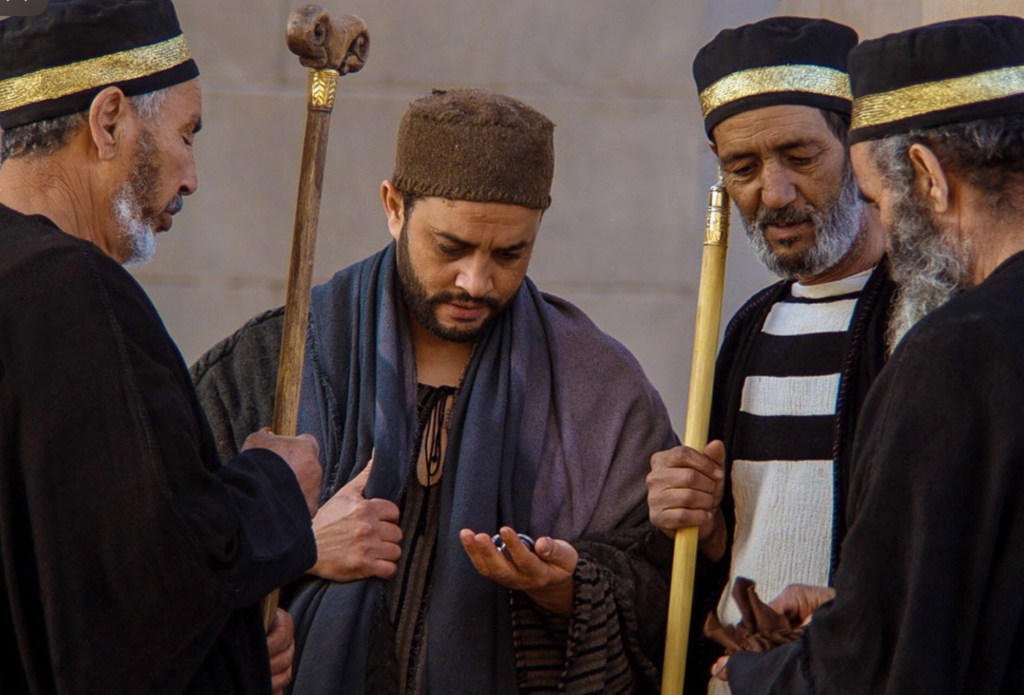
In Matthew 26:14-16 we see that Judas betrays Jesus. It says, “Then Judas Iscariot, one of the twelve disciples, went to the leading priests [15] and asked, “How much will you pay me to betray Jesus to you?” And they gave him thirty pieces of silver. [16] From that time on, Judas began looking for an opportunity to betray Jesus.”
We see in a number of places in the Old Testament prophecies that Jesus will be betrayed for 30 pieces of silver. Zecheriah 11 is one place that talks about this.
In the Hebrew culture, thirty pieces of silver was not a lot of money. In fact, it was the exact price paid to the master of a slave if and when his slave was gored by an ox (Exodus 21:32). In order to compensate for a slave’s death and burial, it was written into law that 30 pieces of silver would account for the cost.
The Son of God, the King of kings, the Lord of all lords, the Saviour of the world was purchased for 30 pieces of silver. The death price of a slave.
The gospels of Matthew, Mark, and Luke are referred to as the synoptic Gospels because they include many of the same stories, often in a similar sequence and in similar or sometimes identical wording.
I find it useful to read them together to get a clearer picture of a teaching, a command or something Jesus did. As an example, today I read Matthew 10 about the sending out of the disciples. In Matthew it simply says what happened…
Matthew 10:1 NLT [1] Jesus called his twelve disciples together and gave them authority to cast out evil spirits and to heal every kind of disease and illness.
In Mark we see that he called them Apostles, He went up the mountain, He told them to preach and He gave them authority to caste out demons…
Mark 3:13-15 NLT [13] Afterward Jesus went up on a mountain and called out the ones he wanted to go with him. And they came to him. [14] Then he appointed twelve of them and called them his apostles. They were to accompany him, and he would send them out to preach, [15] giving them authority to cast out demons.
In Luke we see that he emphasised Jesus going up the mountain to pray all night before choosing the Apostles…
Luke 6:12-13 NLT [12] One day soon afterward Jesus went up on a mountain to pray, and he prayed to God all night. [13] At daybreak he called together all of his disciples and chose twelve of them to be apostles.
This is all the same story, but the different writers record a different perspective. Bible scholars tell us that Matthew was writing mainly for Jews, Mark for Romans and Luke for Greeks.
Each of these groups of people have a different focus or things they admire. Matthew wanted to show the Jews Jesus was the Messiah they were waiting for. Mark knew Romans were people of achievement so he included the things Jesus did. Luke knew the Greeks appreciated things like prayer so he included that.
For us today the synoptic gospels give us a clearer picture by including the same stories from a different perspective. The same thing happened each time, but having three examples from different writers helps us to understand it more clearly.
I find it interesting that in ancient times having two witnesses was sufficient to prove something was true. In the Bible, God chose to have three witnesses record many of the happenings.
The tile of my message today is, “Having the attitude of Christ”. It contains a number of ideas that can encourage us to live right in God’s eyes and have the right attitude that pleases Him. As Christians, this should be our goal.
1. Be unified in Christ
Paul urges the believers to be unified in Christ. He asks them to make him happy by “agreeing wholeheartedly with each other, loving one another, and working together with one mind and purpose” (v2).
Being unified is about loving and caring for each other, putting differences aside and working together in our joint Kingdom purpose. Our goal should be to love God, to love one another and to share God’s love with others. This is God’s Great Commandment from Mark 12:30-31 and Great Commission from Matthew 28:18-20.
In John 17 we see that Jesus prayed for His followers. He prayed that we might be one as He and the Father are one. He prayed for both His followers at the time and also His followers that would believe in the future. He prayed for us! Of all the things that Jesus could have prayed for just days before His crucifixion, He prayed for the unity of His followers. That is how important unity is to Him.
2. Be interested in others like Christ
Verses 3 says, “Don’t be selfish; don’t try to impress others. Be humble, thinking of others as better than yourselves. Don’t look out only for your own interests, but take an interest in others too”.
Life is not just about you and me as individuals. It is about all of us. I think this is a key thing that separates us from the world. I know when I fall into selfish patterns I don’t look out for others. I can become concerned about my interests only. For me this is a red flag. It shows me my attitude is slipping and I need to repent.
Jesus lived in a constant mission of the Father. His goal was to seek and save the lost (Luke 19:10). We see throughout the Gospels He spent time with His Father in prayer and then did what His Father wanted. He went from place to place helping people. Preaching, teaching and healing (Matthew 4:23).
One of my favourite memory verses is Matthew 9:36. It tells us that, “When he saw the crowds, he had compassion on them because they were confused and helpless, like sheep without a shepherd.” Jesus is our perfect example to strive for. His life and His interest in others needs to be our inspiration.
3. Be humble like Christ
Verses 6-8 says, “Though he was God, he did not think of equality with God as something to cling to. Instead, he gave up his divine privileges; he took the humble position of a slave and was born as a human being. When he appeared in human form, he humbled himself in obedience to God and died a criminal’s death on a cross”.
Christ left the glories of heaven to live in this world. He took a lowly place of a servant and even died a “criminals death” for our sin. His humility paved the way for our salvation. Mark 10:45 says, “For even the Son of Man came not to be served but to serve others and to give his life as a ransom for many.”
If Christ showed that humility, I need to show this humility too. I need to know my place before Him and serve Him with the right attitude. The truth is we all need to know our place before Him. As verse 3 of our text says, “Be humble, thinking of others as better than yourselves.” This is the attitude of Christ.
4. Be assured in Christ
Verses 9-11 tell us, “Therefore, God elevated him to the place of highest honour and gave him the name above all other names, [10] that at the name of Jesus every knee should bow, in heaven and on earth and under the earth, [11] and every tongue declare that Jesus Christ is Lord, to the glory of God the Father.”
Because of Christ’s humility and obedience, God has elevated Him to the highest place in the universe. There is no higher place than being seated at the right hand of the Father. Our readings tell us that everyone who has ever lived will bow before Jesus and declare Him as Lord. Some willingly, sadly some will realise after it is too late. No-one will be absent. No-one will miss out. Be assured God will bring all His plans to pass.
Jesus is the one true Lord and Saviour. He is the King of kings and the Lord of all lords. As our reading from Isaiah said, “Let all the world look to me for salvation! For I am God; there is no other.” Jesus is the one we all need to look to. He is the way, the truth and the life (John14:6). There is no other name under heaven where we can find salvation (Acts 4:12). Be assured that if you trust Jesus for your salvation, He will save you.
Closing summary
Today we looked at at great passage from Philippians 2. We got a glimpse of what it is to have the attitude of Christ. We saw four things we need to strive for…



 PASSIONAustralia.blog