Have you ever wondered what Jesus is doing for us now? Jesus now sits at the right hand of the Father in heaven and He is interceding for us. Because He is praying for us, we can boldly bring our requests to the heavenly Father.
What does Jesus do for you as he sits at the Father’s right hand?
Because Jesus intercedes for us as our great high priest, I may now boldly approach the Father and offer my confessions, praises, thanksgivings, and requests to him. (Exodus 33:7–17; Psalm 80; Hebrews 4:14–16; 7:24–8:2)
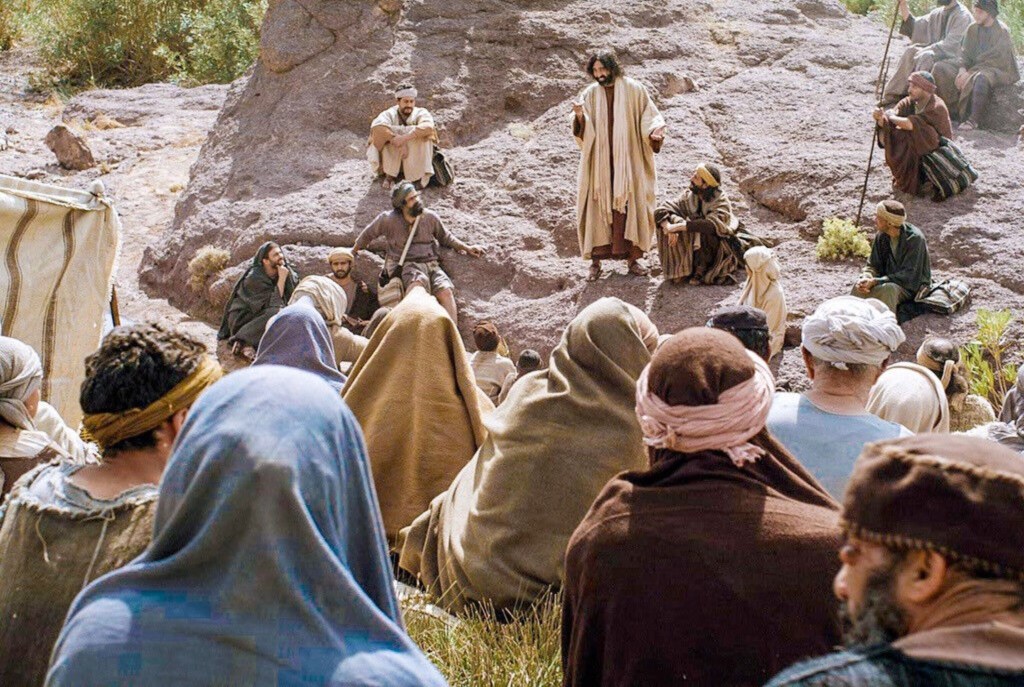
In Matthew 5:3-10 Jesus opens the Sermon on the Mount with The Beatitudes or the be-attitudes as I have heard them called. It says…
3 “God blesses those who are poor and realize their need for him, for the Kingdom of Heaven is theirs. 4 God blesses those who mourn, for they will be comforted. 5 God blesses those who are humble, for they will inherit the whole earth. 6 God blesses those who hunger and thirst for justice, for they will be satisfied. 7 God blesses those who are merciful, for they will be shown mercy. 8 God blesses those whose hearts are pure, for they will see God. 9 God blesses those who work for peace, for they will be called the children of God. 10 God blesses those who are persecuted for doing right, for the Kingdom of Heaven is theirs.
It is interesting to note that the Greek work used for “blesses” is Makareeos (Mak-ar-ee-os). This word can be translated as supremely blessed, fortunate, well off, or happy. This helps us to further understand what this passage means.
When I first read this passage years ago I thought it was talking about different groups of people. However, over time I have come to see that these are the attitudes we should all display as Christians.
In much the same way we should display the Fruits of the Spirit that Galatians 5:22-23 talks about, as Christians we should display these qualities that Jesus opened His most famous sermon with.
God wants us to realise our need for Him, He wants us to want to see justice done, He wants us to be merciful, He wants us to be pure of heart. He also promises to comfort us when we mourn and when we are persecuted for our faith.
Let’s all purpose today to really live with pure hearts, to be humble, to work for peace, to show justice and realise our complete and total dependence on God.
Below are a number of Bible verses that talk about healing. I used to read them out loud everyday when I was really sick with Rheumatoid Arthritis. They helped to fill me with hope and faith.
Exodus 23:25 – Worship the LORD your God, and his blessing will be on your food and water. I will take away sickness from among you.
Psalm 103:1-3 – Praise the LORD, O my soul; all my inmost being, praise his holy name. Praise the LORD, O my soul, and forget not all his benefits– who forgives all your sins and heals all your diseases
Psalm 107:20 – He sent forth his word and healed them; he rescued them from the grave.
Psalm 118:17 – I will not die but live, and will proclaim what the LORD has done.
Proverbs 4:20-22 – My son, pay attention to what I say; listen closely to my words. Do not let them out of your sight, keep them within your heart; for they are life to those who find them and health to a man’s whole body.
Joel 3:10 – …Let the weakling say, “I am strong!”
Matthew 8:2 – When he came down from the mountainside, large crowds followed him. A man with leprosy came and knelt before him and said, “Lord, if you are willing, you can make me clean.” Jesus reached out his hand and touched the man. “I am willing,” he said. “Be clean!” Immediately he was cured
Mark 11:22-24 – “Have faith in God,” Jesus answered. “I tell you the truth, if anyone says to this mountain, `Go, throw yourself into the sea,’ and does not doubt in his heart but believes that what he says will happen, it will be done for him. Therefore I tell you, whatever you ask for in prayer, believe that you have received it, and it will be yours.
Philippians 2:13 – For it is God who works in you to will and to act according to his good purpose.
Philippians 4:6-7 – Do not be anxious about anything, but in everything, by prayer and petition, with thanksgiving, present your requests to God. And the peace of God, which transcends all understanding, will guard your hearts and your minds in Christ Jesus.
Hebrews 10:23 – Let us hold unswervingly to the hope we profess, for he who promised is faithful.
2 Timothy 1:7 For God did not give us a spirit of timidity, but a spirit of power, of love and of self-discipline.
Hebrews 13:8 – Jesus Christ is the same yesterday and today and forever.
James 5:14-16 – Is any one of you in trouble? He should pray. Is anyone happy? Let him sing songs of praise. Is any one of you sick? He should call the elders of the church to pray over him and anoint him with oil in the name of the Lord. And the prayer offered in faith will make the sick person well; the Lord will raise him up. If he has sinned, he will be forgiven.
1 Peter 2:24 – He himself bore our sins in his body on the tree, so that we might die to sins and live for righteousness; by his wounds you have been healed.
All of us have a purpose from God. We were born at this time in history to fulfil our God given purpose. God has made us and gifted us all to do His work.
The great news is we do not have to fulfil His purpose alone. He gives us His Holy Spirit to empower us and the Holy Spirit gifts us to complete our tasks.
In the Bible we see there are four main places that talk about gifts from God to individuals to serve and gifts to the church for equipping.
The first group of gifts is found in 1 Corinthians 12:4-11. These are often called the gifts of the Holy Spirit. The Holy Spirit decides who gets what gift.
[4] There are different kinds of spiritual gifts, but the same Spirit is the source of them all. [5] There are different kinds of service, but we serve the same Lord. [6] God works in different ways, but it is the same God who does the work in all of us. [7] A spiritual gift is given to each of us so we can help each other. [8] To one person the Spirit gives the ability to give wise advice; to another the same Spirit gives a message of special knowledge. [9] The same Spirit gives great faith to another, and to someone else the one Spirit gives the gift of healing. [10] He gives one person the power to perform miracles, and another the ability to prophesy. He gives someone else the ability to discern whether a message is from the Spirit of God or from another spirit. Still another person is given the ability to speak in unknown languages, while another is given the ability to interpret what is being said. [11] It is the one and only Spirit who distributes all these gifts. He alone decides which gift each person should have.
The second group of gifts is found in Romans 12:6-8. Bible scholars sometimes call these the gifts of the Father. In this list it tells us the gift and the importance of using them well.
[6] In his grace, God has given us different gifts for doing certain things well. So if God has given you the ability to prophesy, speak out with as much faith as God has given you. [7] If your gift is serving others, serve them well. If you are a teacher, teach well. [8] If your gift is to encourage others, be encouraging. If it is giving, give generously. If God has given you leadership ability, take the responsibility seriously. And if you have a gift for showing kindness to others, do it gladly.
In the third list of gifts it talks about different roles within the church. These are sometimes called Christ’s gifts to the church. These gifts are found in Ephesians 4:11-12. The purpose is to equip the church for service.
[11] Now these are the gifts Christ gave to the church: the apostles, the prophets, the evangelists, and the pastors and teachers. [12] Their responsibility is to equip God’s people to do his work and build up the church, the body of Christ.
In the final list of gifts it only lists two gifts, but it gives us information on how to use them – for the good of others and to use the strength and energy God provides. It also reminds that the reason for our service is to bring glory to God. This list is found in 1 Peter 4:10-11.
[10] God has given each of you a gift from his great variety of spiritual gifts. Use them well to serve one another. [11] Do you have the gift of speaking? Then speak as though God himself were speaking through you. Do you have the gift of helping others? Do it with all the strength and energy that God supplies. Then everything you do will bring glory to God through Jesus Christ. All glory and power to him forever and ever! Amen.
I really find these lists of gifts helpful in our service of God. God has a purpose and destiny for each of us. Just like God said to Jeremiah, He knit us together in our mother’s womb (Jeremiah 1:5). He made us and gifted us to serve Him in this time.
As Christians we have the Holy Spirit within us as and this is the same Spirit that raised Christ from the dead (Romans 8:11). He gifts us to serve God, by serving others, and He empowers us to be His witnesses (Acts 1:8).
Today I would like to remind us all that not only were we made by God for this times in history, but He made us to serve Him by giving us gifts and power from heaven. Let us purpose in our hearts to use our gift well.
In the Bible it uses the words “one another” a number times in the New Testmant. It talks about how we are to interact and care for each other. Here are three examples.
Serve one another
1 Peter 4:10 – God has given each of you a gift from his great variety of spiritual gifts. Use them well to serve one another.
The Apostle Peter tells us the importance of using our gifts to serve one another. We are all made a particular way, with special gifts, that enable us to serve one another. It is important to find, develop and use our gifts to make each other’s lives better.
Love one another like Christ loved us
John 13:34-35 – So now I am giving you a new commandment: Love each other. Just as I have loved you, you should love each other. [35] Your love for one another will prove to the world that you are my disciples.”
Jesus told us to love one another like He loved us. This is no easy task as He loved us completely and died on the cross for us. However, when we use our gifts and love one another from our hearts, we not only fulfil Jesus’ command, but we show we are truly His disciples.
Encourage one another
Hebrews 10:24-25 – Let us think of ways to motivate one another to acts of love and good works. [25] And let us not neglect our meeting together, as some people do, but encourage one another, especially now that the day of his return is drawing near.
All of us struggle at times and we all need encouragement. The Apostle Paul reminds us of the need to both motivate one another to do good works and to encourage one another. We should take some time to ponder who in our life needs encouragement and how we can do it. Often a kind word or a short text can make a difference.
Loving and caring for one another is just so important in this life. Jesus, the Apostle Paul and the Apostle Peter talked about this a lot in the Bible. In what ways can you put these verse in to practice today?




 PASSIONAustralia.blog