Great Words of the Gospel – Redemption
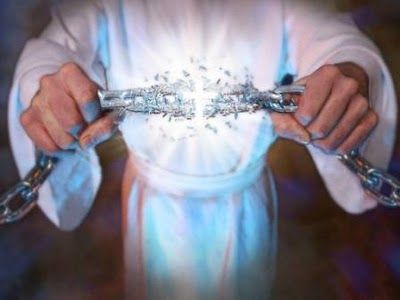
In last weeks’ message in our Great Words of the Gospel series we looked at the topic of salvation. We looked briefly at Old Testament salvation and how God used the word Yeshua’ah to describe the salvation and deliverance He gave the Israelites. We also looked at the animal sacrifices that were required to temporary cover the peoples sin and guilt until Christ came.
We then looked at New Testament salvation and how that is wrapped up completely in the finished work of Christ. We saw the three aspects of salvation that there is a need, a provision in Christ and a response that we all need to make. We also looked at some verses of assurance and a simple salvation prayer.
In this week’s message I want to look at another of the great words of the gospel – redemption. This word hangs dependently on the finished work of Christ on the cross. It is a key word that is wrapped up in our faith and trust in Christ.
I want to start with a definition of redemption and then share four things that redemption offers us.
Let’s pray
Loving Heavenly Father,
Let Your people hear the good news of Your love, the good news of Your forgiveness and the good news of Your acceptance in my words today. Let me show them afresh Jesus and all He has done for them. Amen
What is Redemption?
Redemption is an important word in the Christian faith. Redemption is about the buying back or release of an object or person. In the Bible redemption refers to God’s ransoming of believers through the death of Jesus Christ upon the cross and to all the benefits that this brings. So Jesus paid the price on the cross to redeem us back to God.
1. We needed to be redeemed because we could save ourselves.
As we saw last week in my message about salvation we saw that in our natural state without Christ we have all sinned and fallen short of the glory of God (Romans 3:23) and that this sin separates us from God (Isaiah 59:2).
Some people and some religions think they can redeem themselves by good works. They think if their good deeds out way their bad deeds, then God will accept them. The Bible tells us that salvation is not by good works, so no-one can boast. It is a gift from God (Ephesians 2:8-9).
This is where Christ comes in with His work on the cross. In Christ we have been freed. Through His death on the cross as a payment for our sin the price has been paid.
Colossians 1:13-14 “For he has rescued us from the dominion of darkness and brought us into the kingdom of the Son he loves, in whom we have redemption, the forgiveness of sins.”
Ephesians 1:7 tells us that, “In him we have redemption through his blood, the forgiveness of sins, in accordance with the riches of God’s grace”.
Mark 10:45 says, “For even the Son of Man did not come to be served, but to serve, and to give his life as a ransom for many.”
1 Timothy 2:5-6 tells us that, “There is one God and one mediator between God and men, the man Christ Jesus, who gave himself as a ransom for all men—the testimony given in its proper time”.
Jesus gave His life as a ransom for many. It is by Christ’s shed blood that our sins are forgiven. We celebrate this each week in communion. His death opened the way to God. He is the one mediator between God and mankind. Our redemption is 100% totally and completely paid for by the death of Christ. As Jesus said in John 19:30 before He died – it is finished. Three words that ring out for all eternity.
2. We are freed from being slaves to sin
The Bible tells us that without Christ we were slaves to sin. John 8:34 Jesus said, “I tell you the truth, everyone who sins is a slave to sin.” So in our natural state apart from Christ we are slaves to sin and we need redeeming.
In the New Testament there are three main Greek words used to describe redemption. In keeping with the thought of being a slave to sin these words give us a picture of being bought and sold in a slave market.
The first word is Agorazo – this means to “purchase in the market”. This is like a slave bought and sold in the slave market. They are always a slave and can be re-sold at any time. They are kept and made to work for the owner and once they are finished with them they can be re-sold to someone else.
The second word is Exagorazo – this means to “purchase out of the market”. This is like someone buying a slave and taking them as their own property and never being sold again. They keep the slave to serve them as their own property. It is a long term deal for the life of the slave.
The final word is Lutroo – this means “to loosen” or to “set free by paying a price”. The slave is permanently purchased out of the market and set free from the market forever. This is what we have in Christ as believers and disciples.
This last word Lutroo gives us a clear picture of what we have in Christ. True freedom. We are no longer a slave to sin. We are forever released from the market of sin. The power of sin and death has been broken in our lives. We are set free and as John 8:36 says, “If the son has set you free, you will be free indeed”.
3. We are redeemed to live a new free life.
As we have seen we are redeemed by the work of Christ. There are four main things we have in our redemption.
a. Justified before God
Romans 3:24 tells us that we “are justified freely by his grace through the redemption that came by Christ Jesus”.
To justify or the term justification means “just as if I had never sinned”. We now have right standing with God. When God looks at you and I He looks at us through the lens of Christ – perfect, sinless and holy. He doesn’t see our sin, He sees Jesus. Isaiah 1:18 reminds us that, “Though your sins are like scarlet, they shall be as white as snow; though they are red as crimson, they shall be like wool.” For those in Christ, it is a present reality.
b. Set free from the law
Galatians 4:4-5 – But when the time had fully come, God sent his Son, born of a woman, born under law, to redeem those under law, that we might receive the full rights of sons”.
The apostle Paul often used the idea of being slaves to the law because the people of the Old Testament lived under it and tried, and failed, to live up to it. Now as Christ followers we are free from the law and are adopted as God’s children. This verse says we have full right as God’s children. The same rights as Jesus as we are co-heirs.
c. Free from a pointless existence
1 Peter 1:18-19 says, “For you know that it was not with perishable things such as silver or gold that you were redeemed from the empty way of life handed down to you from your forefathers, but with the precious blood of Christ, a lamb without blemish or defect”.
Before I came to Christ I thought my life was full and exciting. After coming to Christ, and the blinkers were taken off, I realised that I was deceived and my life was way more empty than I could have imagined. I filled it with pointless things like jobs, cars, sport, fitness. Not that they are bad, but I filled my life with them and gave them more weight or focus that they needed. Now my life is filled with Christ. Filled to the point of overflowing and streams of living water flow out that contain the love of Christ. It is a much better life than I could ever imagined.
d. We have a great future hope
Revelation 21:3-4 says, “And I heard a loud voice from the throne saying, “Look! God’s dwelling place is now among the people, and he will dwell with them. They will be his people, and God himself will be with them and be their God. ‘He will wipe every tear from their eyes. There will be no more death’ or mourning or crying or pain, for the old order of things has passed away.”
As I touched on in Communion recently. The hope we have in Christ is not just contained to the here and now. We also have a future hope. We have a hope of spending eternity with the Lord. It will be a place where there is no sickness or disease, a place where there will no wars or fighting only perfect unity, it will be a place where everyone feels good about themselves, it will be a place where we will not struggle with sin; and best of all, it will be a place where we will see our Lord face to face.
4. God redeemed us because of His love and mercy
What motivated the Creator of all things to redeem and save us? Here is an excerpt from a recent KYB study we did…
“God’s motivation comes from the nature of God Himself. It is expressed in four words – love, mercy, grace and kindness.
Can we imagine a love so great that it could give new life to those who deserved God’s wrath? Or mercy so tender that it would reach down to help the helpless? Or grace so full and free that it would pay the price that sinners could not pay? Where else could we find kindness so rich and full that it would embrace those who were, by nature, ‘the enemy’?” (from KYB Ephesians study page 21).
God redeemed us because He loved us. He redeemed us because of His mercy. He redeemed us because of His grace. He redeemed us because of His kindness. It also gave Him good please to do it.
A story
Before I close I want to share a story I read a little while ago that helped me to understand redemption. It goes like this…
There was a story of the little boy who built a small sailboat. He built the boat from a kit and had it all fixed up, he tarred and painted it. Once it was ready he took it to the lake and pushed it in hoping it would sail. Sure enough a wisp of breeze filled the little sail and it billowed and went rippling along the waves.
Suddenly before the little boy knew it, the boat was out of his reach, even though he waded in fast and tried to grab it. As he watched it float away, he hoped maybe the breeze would shift and it would come sailing back to him. Instead he watched it go farther and farther until it was gone. He searched up and down the banks for hours, but he could not find it.
Eventually when he lost all hope, he went home crying, his mother asked, “What’s wrong, didn’t it work?” And he said, “It worked too well.”
Sometime later, the little boy was downtown and walked past a second hand store. There in the window he saw the boat. It was unmistakably his, so he went in and said to the proprietor, “That’s my boat.” He walked to the window, picked it up and started to leave with it. The owner of the shop said, “Wait a minute, Sonny. That’s my boat. I bought it from someone.” The boy said, “No, it’s my boat. I made it. See.” And he showed him the little scratches and the marks where he hammered and filed. The man said, “I’m sorry, Sonny. If you want it, you have to buy it.”
The poor little guy didn’t have any money, but he worked hard and saved his pennies. Finally, one day he had enough money. He went in and bought the little boat. As he left the store holding the boat close to him, he was heard saying, “You’re my boat. You’re twice my boat. First you’re my boat ’cause I made you, and second you’re my boat ’cause I bought you!”
If you ever think that you aren’t worth much, just remember what God thinks of you. He thinks you’re His. Twice His. First you’re His because He made you. And second you’re His because He bought you on the cross. He paid a price to redeem you.
Closing summary
In today’s message we looked at the topic of Redemption. We saw that…
- We are redeemed by Jesus death on the cross for us.
- We are redeemed because we could save ourselves.
- We are redeemed and freed from being slaves to sin.
- We are redeemed to live a new free life.
- We are redeemed because of God’s great love and mercy.
Amen.
Let us pray.
Loving Heavenly Father, I thank You that You loved us so much that Jesus came on died on the cross for our sin. I thank You that He paid the price to redeem us and bring us back to You. I pray today that You will sink this truth deep into our hearts and minds. That You love, that You redeemed us and that You have brought us back into right relationship with You – both now and for all eternity. I pray in Jesus’ name, Amen


 PASSIONAustralia.blog