To be a Christian book
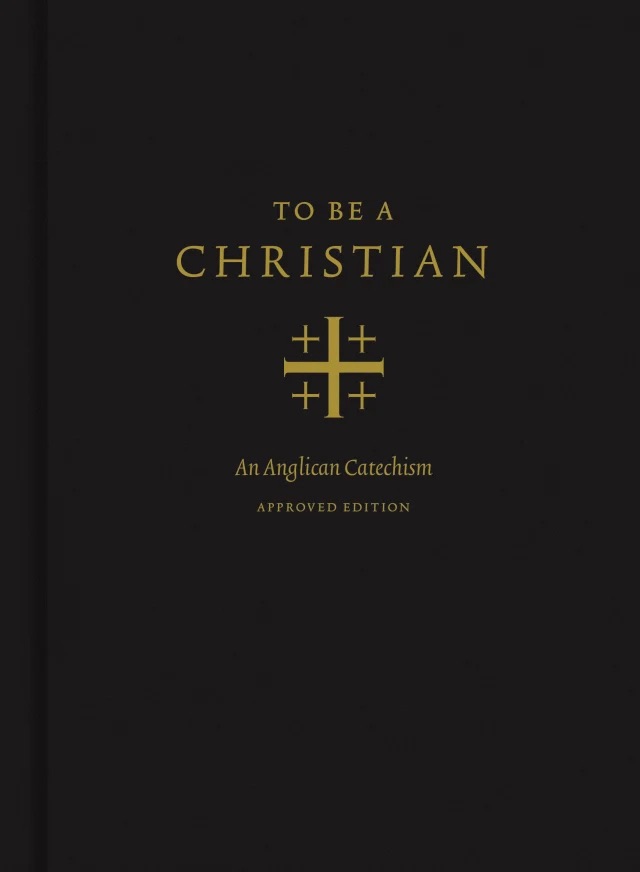
I just received a hard copy of a book I have been reading. I had been reading the PDF version and found it to be a great resource, so I decided to add it to my physical library.

To be a Christian is a catechism style book that has over 360 questions and answers. It touches on all areas of our faith as Christians. I wish I had something like this as a new Christian, it would have been really helpful.

Here is an example question and answer about Jesus…

  1. Who is Jesus Christ?
    Jesus is the eternal Son of God, the Savior of the world. Fully divine, he took on our human nature, died on the Cross for our sins, rose from the dead, ascended into heaven, and now rules as Lord and King over all creation. (Numbers 21:4–9; Psalm 110; John 3:13–15; Philippians 2:5–11; Colossians 1:15–20)

I really love that it has a short answer that you could memorise and it has all the Bible references that you can look up.

Here is a description from the publisher…

Catechesis is an ancient practice of Christian disciple making that uses a simple question-and-answer format to instruct new believers and church members in the core beliefs of Christianity. To Be a Christian, by J. I. Packer and a team of other Anglican leaders, was written to renew this oft-forgotten tradition for today’s Christians. With over 360 questions and answers, plus Scripture references to support each teaching, this catechism covers the full range of Christian doctrine and life, drawing from the Apostles’ Creed, the Lord’s Prayer, the Ten Commandments, and other important doctrinal summaries. Clear, concise, and conversational, this resource was written for all believers who seek to be grounded more deeply in the truth of God’s Word.

I downloaded a free PDF copy from here, and then purchased a hard back copy from Koorong.com here.

How many Christian denominations?

One statistic I have heard quoted many times is that since the Reformation in the 16th century 45,000 Protestant denominations have arisen. I have lost track of the times of have heard it said and then quoted as a source.

Today I watched a YouTube video by Ready to Harvest that talked about this and where the figures came from. It is quite interesting to see the original research and the methodology used to come to that number. You may be surprised to know the number is way smaller than 45,000, more closer to 300 main denominations.

The family of God

John 1:12 NLT – But to all who believed him and accepted him, he gave the right to become children of God.

The Bible tells us we become children of God when we believe in who Jesus is and accept Him as our Lord and Saviour. We become His children and a part of His eternal family. This means we join every person who has accepted Jesus in the last 2000 years!

When we accept Jesus we become part of the communion of saints that the Apostle’s Creed talks about. We are brothers and sisters with those alive today and those who have already gone to heaven.

God’s eternal family is big, very big. But the good news is there is room for more. The Bible tells us that God is being patient so every last person can make it in. He does not want any one to perish, but all to come to repentance (2 Peter 3:9).

If you would like to accept Jesus as your Lord and Saviour, you can pray the prayer below.

Prayer

Dear Lord Jesus, I know that I am a sinner, and I ask for Your forgiveness. I believe You died for my sins and rose from the dead. I turn from my sins and invite You to come into my heart and life. I want to trust and follow You as my Lord and Saviour. In Your Name. Amen

For more information please visit my finding salvation page and my discipleship page.

Billy Graham documentary

I just watched this special on the life and preaching of Billy Graham. Watching it brought me to tears many times. To me Billy was an inspiration in the way he stayed true to God and the message of salvation through Jesus. To hear him preach again and see people streaming to the front of stadiums to accept Jesus is priceless.

Baptism and the type of water

I have been reading up on Baptism afresh lately. Looking at the different churches and how they practice the sacrament down through the ages.

To give you some background. As an infant I was Baptised at our local Catholic church in Perth. My father’s family were Catholic and it was important to them that all the children and grandchildren were baptised.

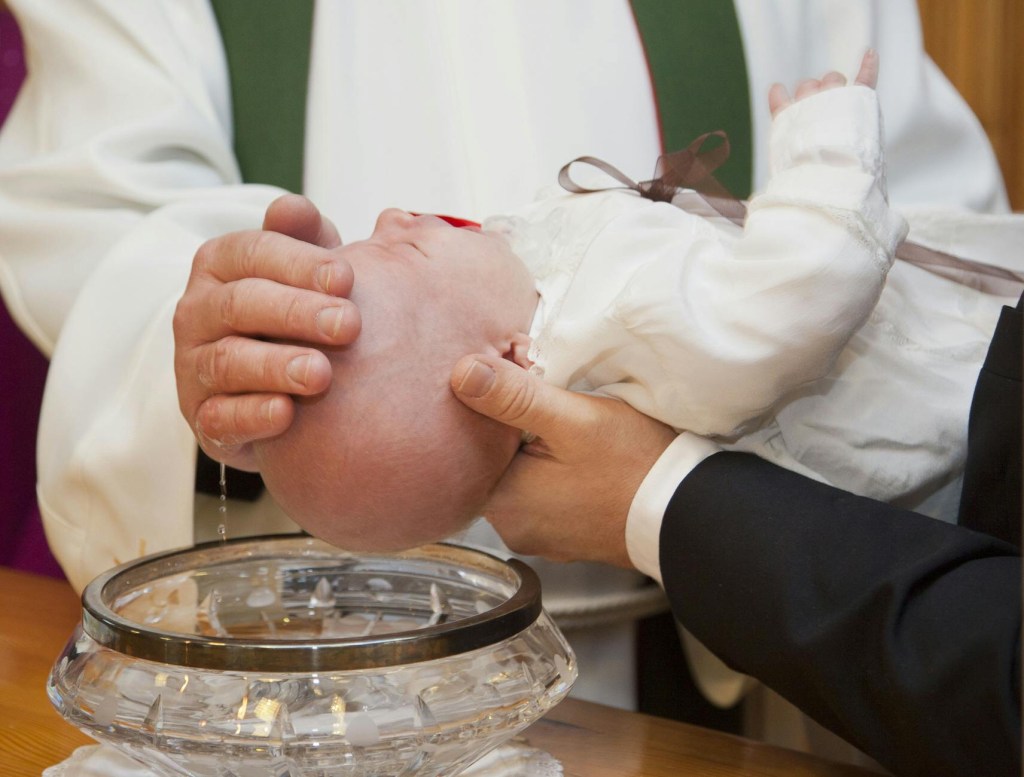
From conversations I have had with my Mum I was held by the Priest at the baptismal font, prayed for and water was sprinkled/poured over my head in the name of the Father, Son and Holy Spirit.

As a child and in to my teenage years I did not attend church after baptism. However, in my early twenties I felt a drawing towards God. I had a desire to read the Bible, learn to pray and I thought about attending church. I had some friends at work who were Christians who invited me to come to their local Baptist church.

After coming to faith in Christ the topic of baptism came up. Being a Baptist church they taught believers baptism by full immersion in the water. After talking with Pastor several times to make sure I understood baptism, I was baptised during a church service.

So in essence I was baptised twice. Once as an infant and once as a believing adult. Once by sprinkling water over my head and once by full immersion. This lead me to the question – which method is right – sprinkling or full immersion?

If we go back through church history we see that both methods have always been practiced. The Catholic, Anglican, Lutheran and some Methodists practice sprinkling (or pouring) on infants. While Baptist, Church of Christ and other evangelical and pentecostals generally practice full immersion of children and adult believers.

If we look at one of the earliest writings of the church in the Didache or Teaching of the Twelve Apostles as it is known (circa 80-120AD) it gives some instruction…

Baptism

And concerning baptism, baptize in this way: having reviewed all of these things, baptize in the name of the Father, and of the Son, and of the Holy Spirit, in running water. But if you do not have access to running water, baptize in other water. And if you are not able to baptize with cold water, then baptize with warm water. But if you possess neither, pour water on the head three times, in the name of the Father, and of the Son, and of the Holy Spirit. And before the baptism the baptizer should fast beforehand, and the one being baptized and any others who are able. Call upon the one being baptized to fast beforehand for one or two days.

Brannan, R. (tran.) (2012) The Apostolic Fathers in English. Bellingham, WA: Lexham Press.

We see from this that in the very early church they practiced both forms of Baptism. Both pouring of water on the head and full immersion in a body of running water were used. The key components were water and baptising in the name of the Father, Son and Holy Spirit.

Baptism certainly is an interesting topic when you research how it has been done down through the ages and how it is practiced today. The two keys for me is baptising with water and in the name of the Father, Son and Holy Spirit.