Here is another simple answer to a great question. It is from “To be a Christian” #65…
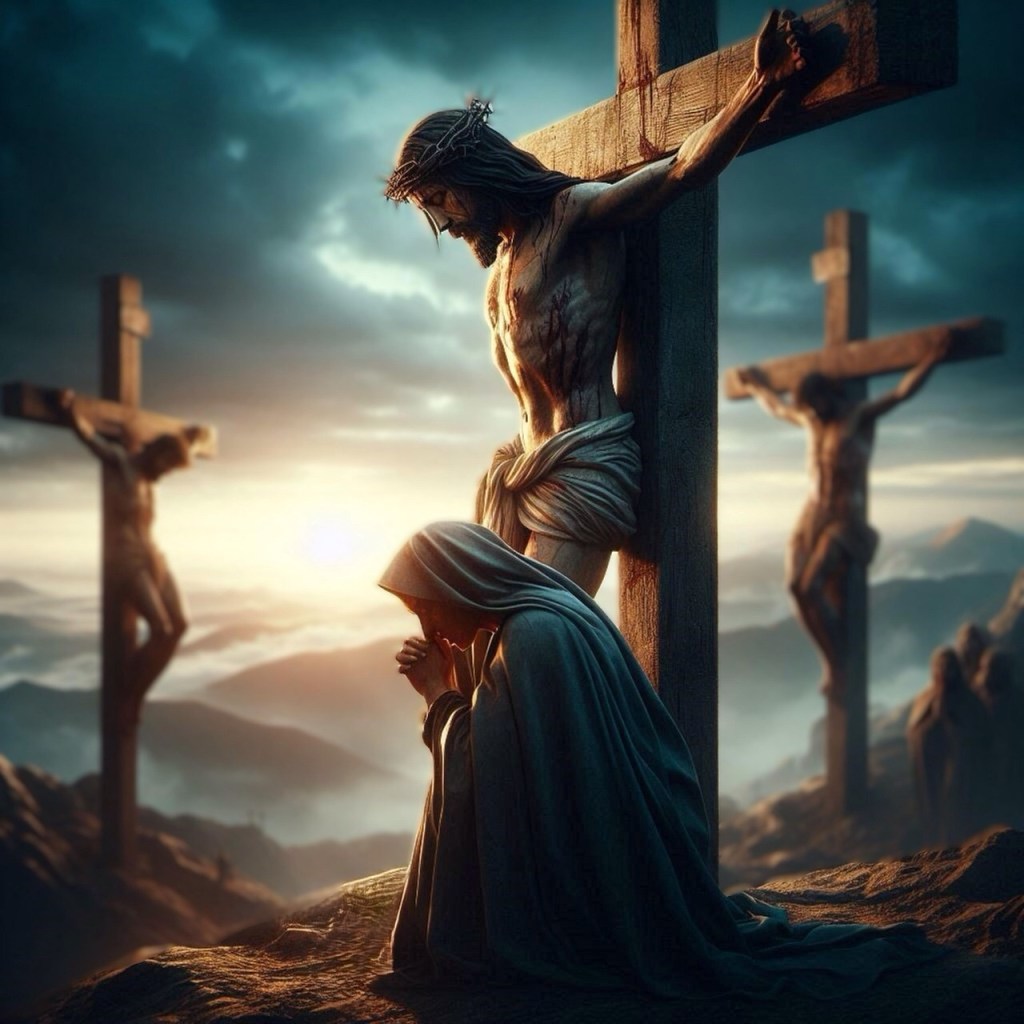
What does Jesus’ death mean for you? Jesus bore my sins and died the death that I deserve, so that I could be saved from sin and eternal condemnation and reconciled to God. (Psalm 32:1–2; Isaiah 53:10–12; Matthew 20:28; Romans 5:8–10; 2 Corinthians 5:17–21)
Jesus died so our sins could be forgiven and we could be in right relationship with God.
Why does this blog exist? I was reading Psalm 71 just now. This expresses the reason why – to tell others of the wonders of God…
Psalm 71:16-18 NLT [16] I will praise your mighty deeds, O Sovereign LORD. I will tell everyone that you alone are just. [17] O God, you have taught me from my earliest childhood, and I constantly tell others about the wonderful things you do. [18] Now that I am old and gray, do not abandon me, O God. Let me proclaim your power to this new generation, your mighty miracles to all who come after me.
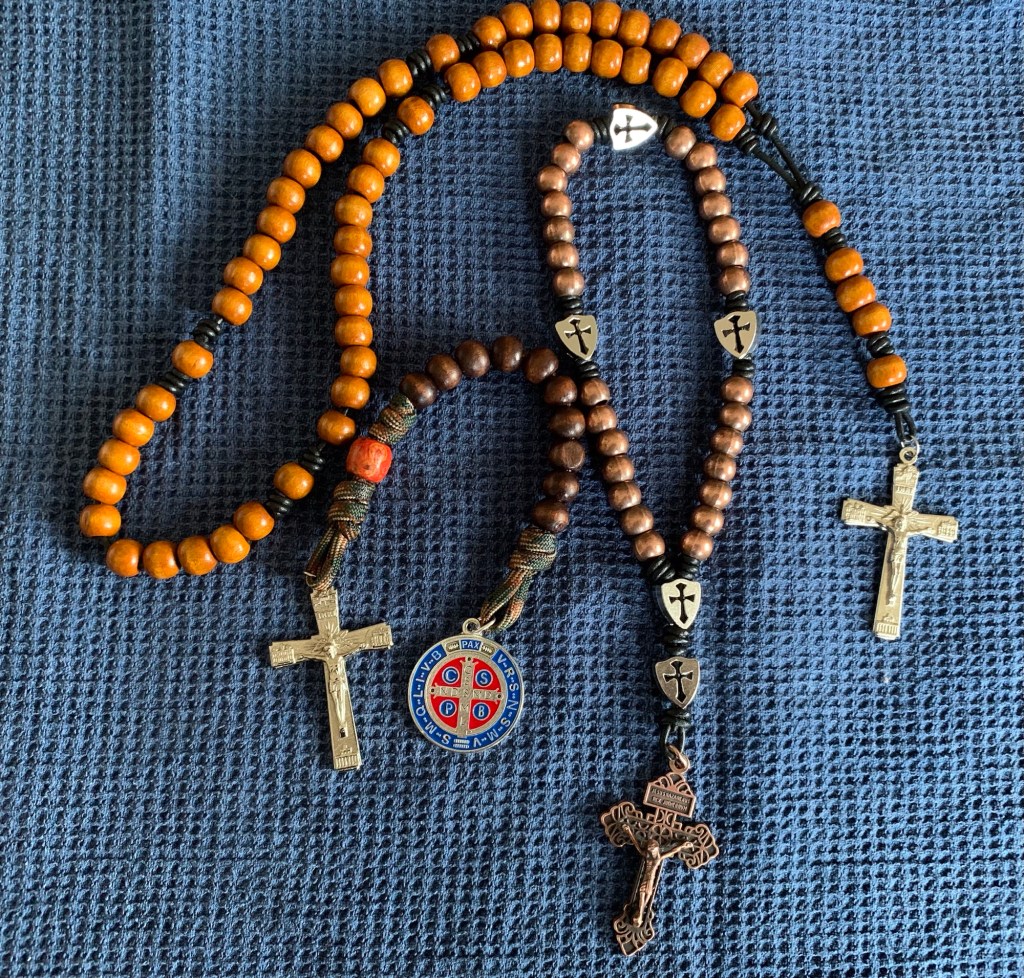
In the last year or so I have started making prayer beads. In the examples above I have learned to make three types.
The Anglican or Christian Rosary has 33 beads. One this you can prayer the Jesus prayer or the Come Lord Jesus prayer. It has an Invitatory bead, four Cruciform beads and 28 smaller weeks beads.
The one decade rosary has 11 beads – an Our Father bead and 10 Hail Mary’s. This is small enough to be easily carried in your pocket.
The traditional Rosary is the longer one that is used by Catholics to pray the Marian Rosary or the Divine Mercy.
I have mainly making them for my own enjoyment and to learn a new skill. I have given away quite a few of them as gifts to be a blessing.
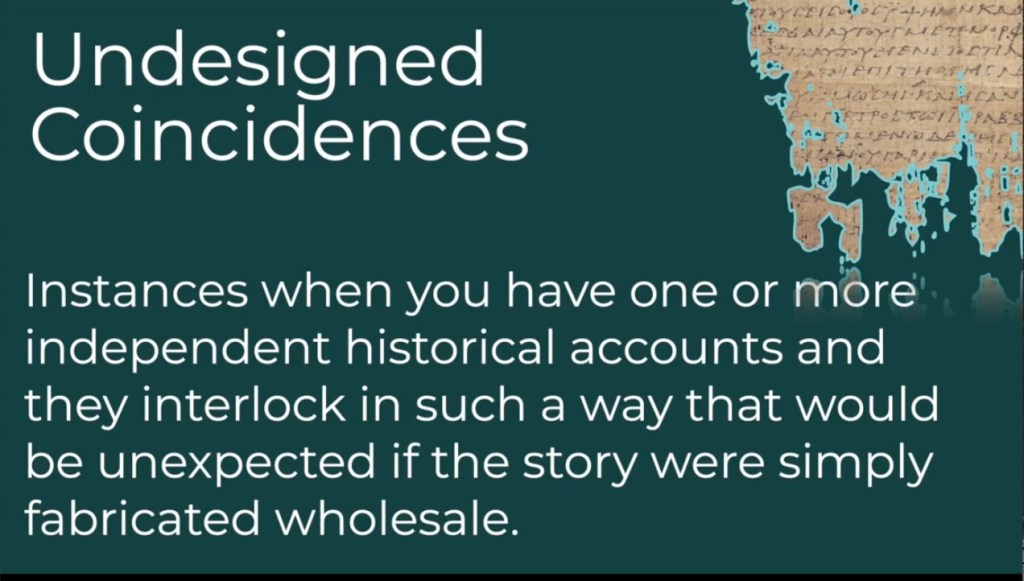
I really enjoyed this video from Wes Huff. He talks about the reliability of the Bible through the various views on the same events from the Gospel writers.
All of us sin. This is a sad reality of living in this fallen world. We do or say things we do not want to do. We also do not do the things we know are right and helpful to others and ourselves. How then, does God deal with our sins?
The book “To be a Christian” has some great thoughts on page 52…
What are sins? Sins are intentions, acts, or failures to act that arise out of my corrupted human nature and fall short of conformity to God’s revealed will. (Psalm 53; Isaiah 59:1–15; Jeremiah 17:9; Romans 3:23; James 4:17; 1 John 3:4–10)
How does God respond to human sin? All sin is opposed to the righteousness of God and is therefore subject to God’s holy condemnation; yet God in his mercy offers me forgiveness and salvation from sin through his Son, Jesus Christ, the only Savior. (Psalm 130; Isaiah 1:2–4; Micah 7:18–19; John 3:17–21; Romans 1:18–2:4; 3:24–26; 5:6–10)
How does God forgive your sins? By virtue of Christ’s atoning sacrifice, in which I put my trust, God sets aside my sins, accepts me, and adopts me as his child and heir in Jesus Christ. Loving me as his child, he forgives my sins whenever I turn to him in repentance and faith. (Leviticus 26:40–45; Psalm 78:35–39; Matthew 26:27–28; Luke 15:11–32; 2 Corinthians 5:16–21; Galatians 4:1–7)
How should you respond to God’s forgiveness? Trusting in God’s continual forgiveness, I should live in continual thanks, praise, and obedience to him; and as I have been loved and forgiven by God, so I should love and forgive those who sin against me. (Psalm 51:7–17; Isaiah 44:21–23; Matthew 6:12; 18:21–35; Ephesians 4:32)
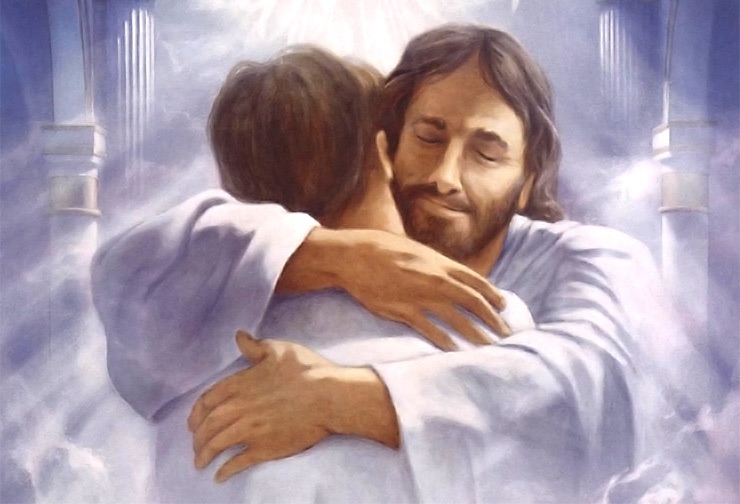
I find this really comforting to know that even though I sin, God is willing and able to forgive me because of what Jesus has done for me.

 PASSIONAustralia.blog